
01
Commercial Build
Engineered for institutional reliability with heavy cast framing and robust mechanical linkages.
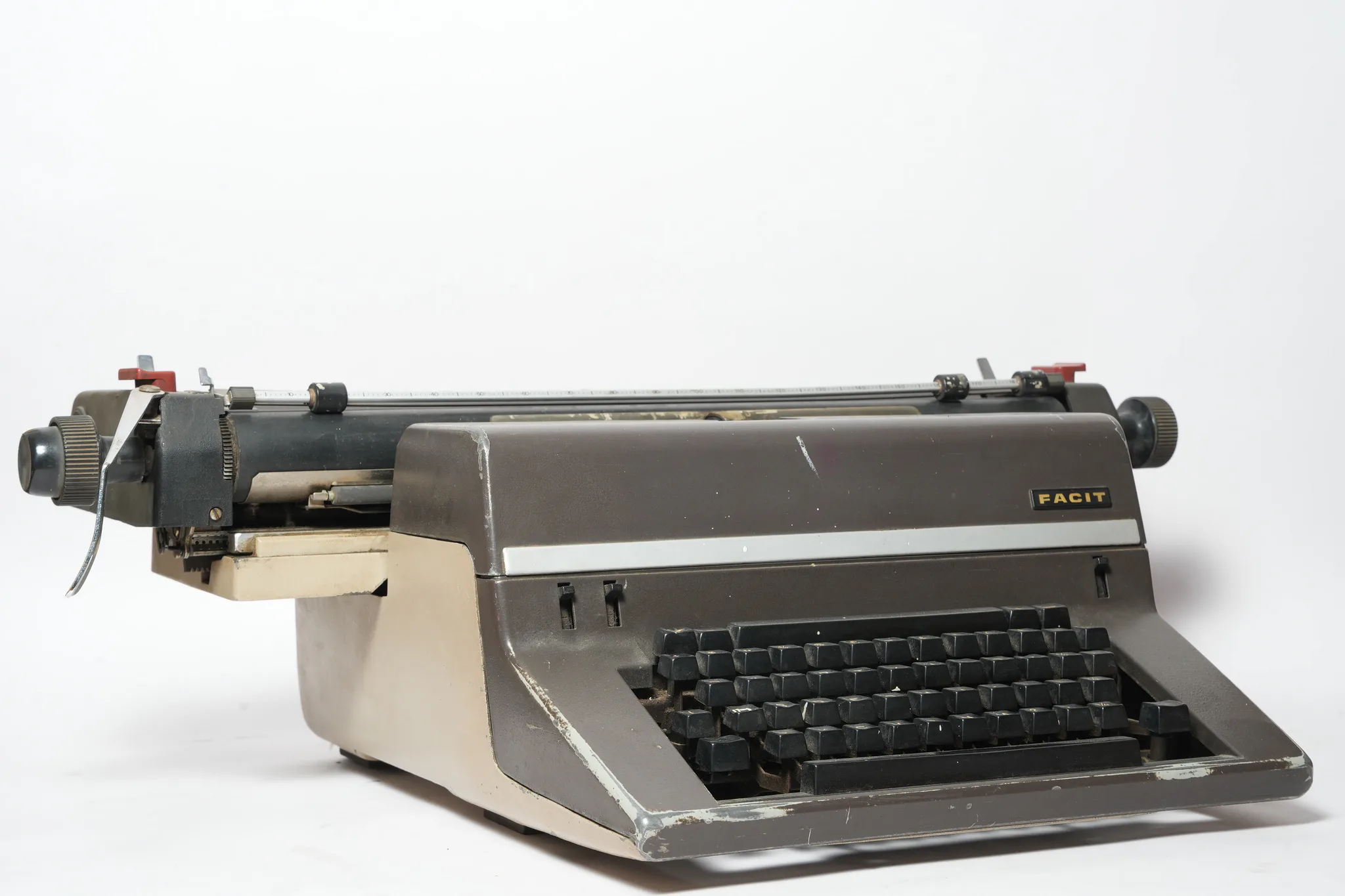
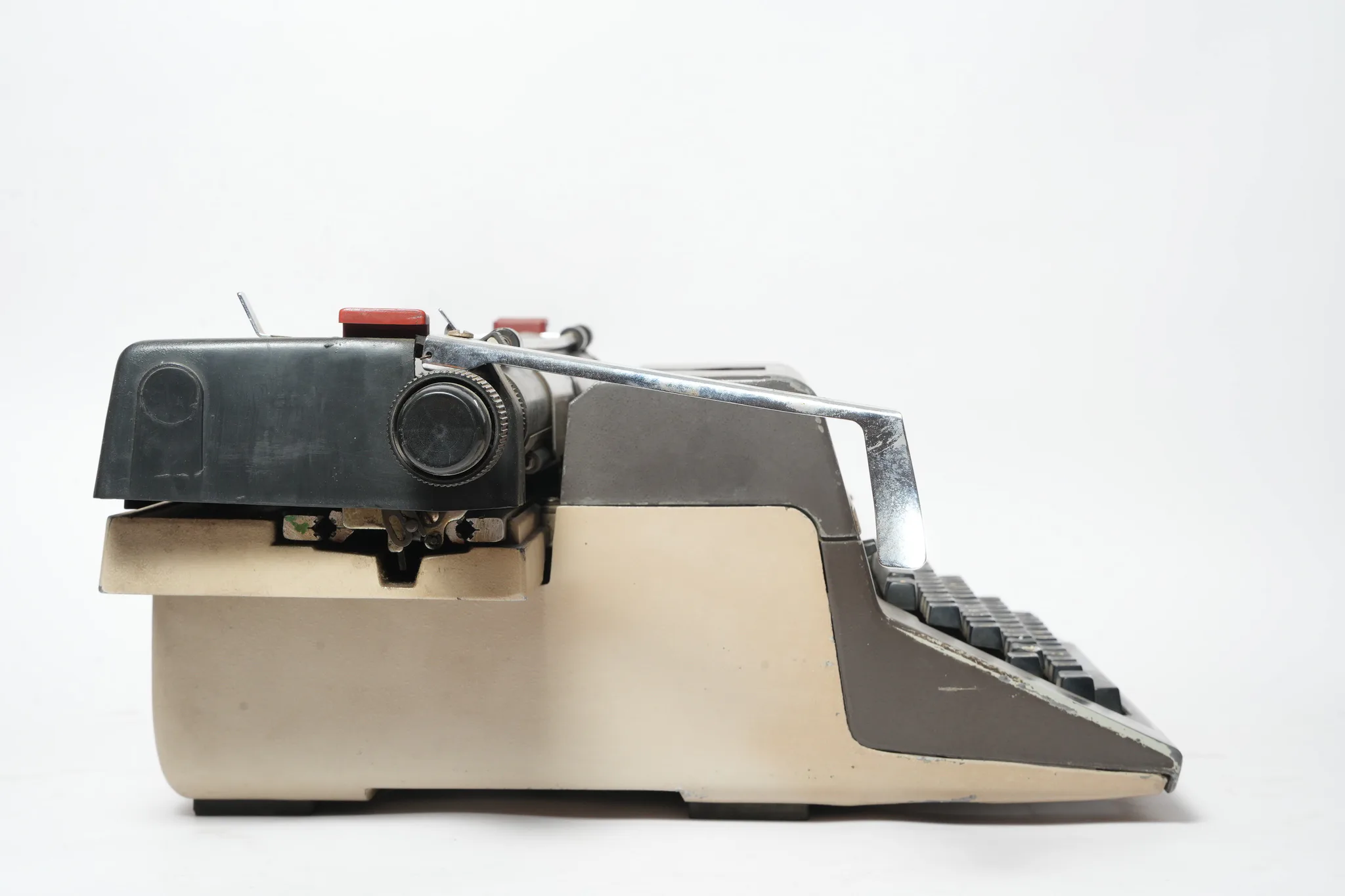
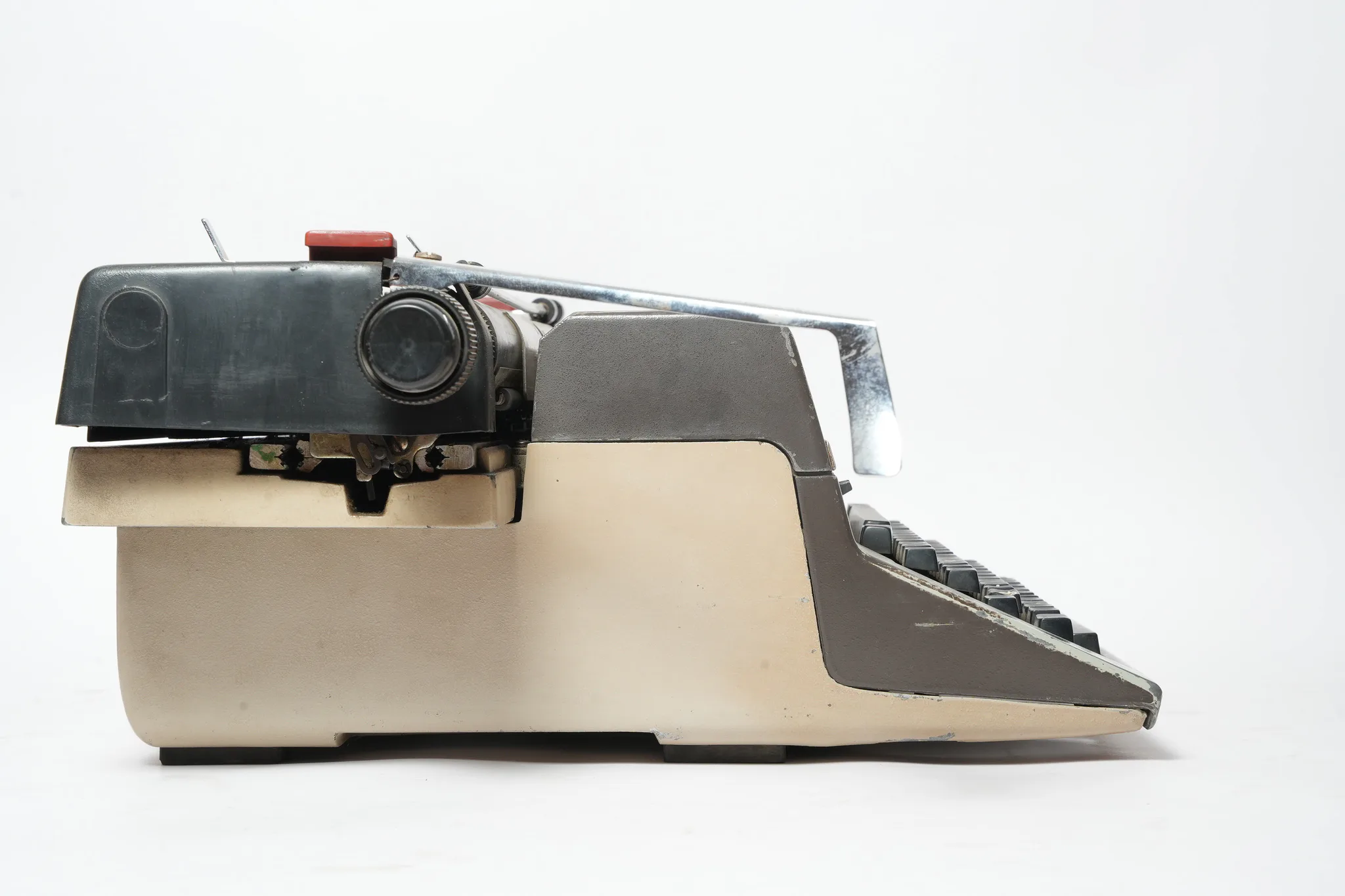
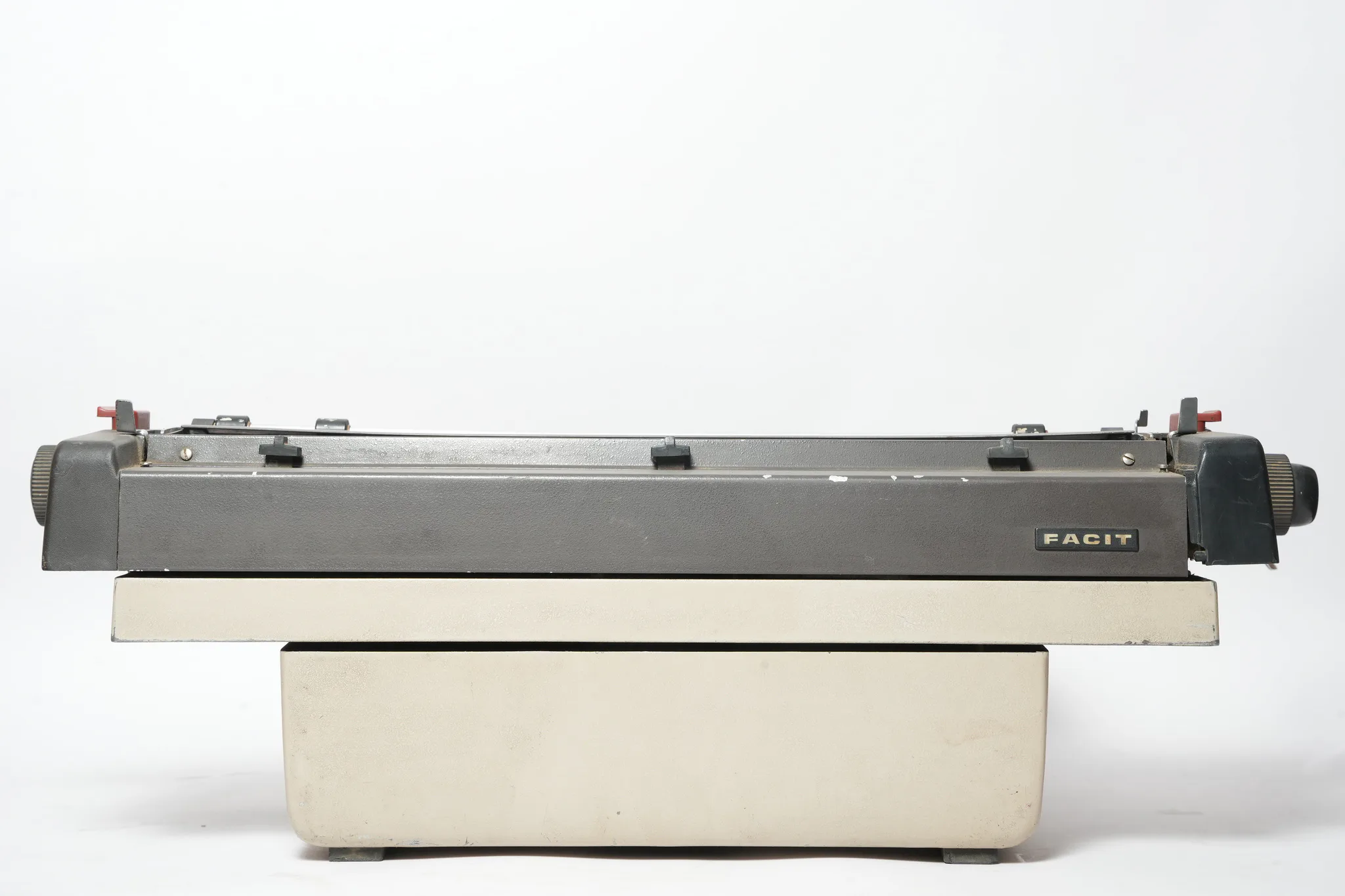
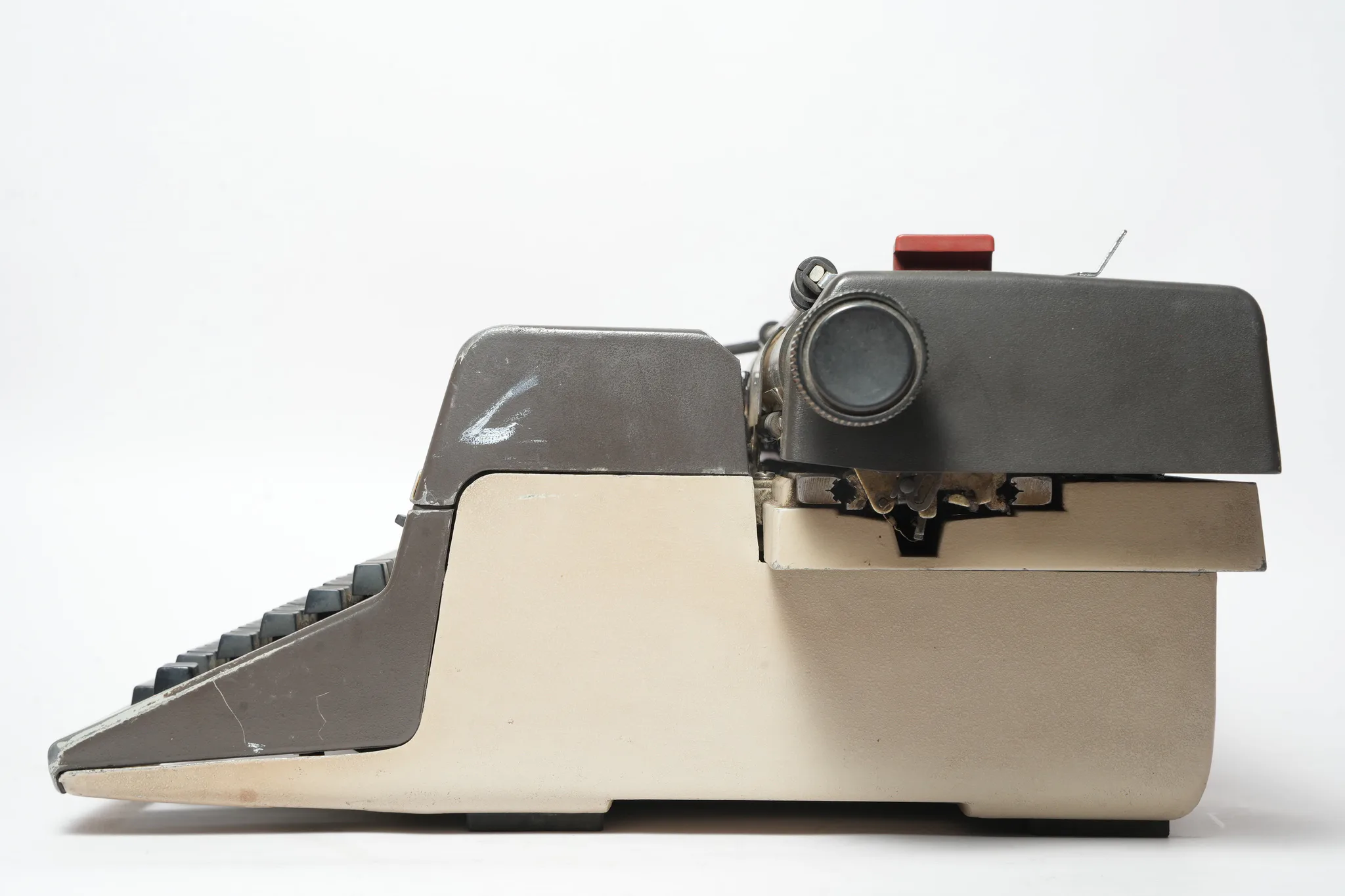
The Facit 1730 is a robust Swedish manual office typewriter featuring an angular two-tone chassis and wide carriage. Built for heavy commercial use during the 1970s, it incorporates an ergonomic keyboard layout, full tabulator system, and precision mechanical escapement. This example displays the classic charcoal and beige finish with authentic period wear.
Engineered for institutional reliability with heavy cast framing and robust mechanical linkages.
Features distinctive 1970s Scandinavian industrial styling combining charcoal and beige tones.
Fitted with an extended carriage assembly and graduated paper scale for versatile office paperwork.
Bears the original gold Facit emblem integrated onto the right front ribbon cover.
Sturdy drop-down chrome carriage return arm positioned for rapid line-spacing operation.
Preserved original cosmetic condition showing true character from decades of utility.
Measurements, construction, identity, and seller-supplied details are kept together for direct comparison.
Provenance documentation was not supplied for this specific Facit 1730 Standard Manual Typewriter; this listing is based on the supplied photographs only.
Seen from the front angle, the crisp geometric silhouette and integrated branding represent Facit's clean functionalist approach to professional typing workstations in the mid-1970s. The account stays anchored to the individual object photographed here, preserving its maker, period, and visible material character for the next collection.
Viewed in profile, the robust tiered frame and forward-reaching chrome return lever illustrate the heavy-duty mechanical engineering built to endure relentless daily office typing. That specificity gives the buyer a traceable, emotionally resonant piece of Sweden design history rather than a generic decorative substitute.
Facit begins manufacturing calculating machines in Åtvidaberg, Sweden.
Facit acquires Halda and expands manufacturing into mechanical office typewriters.
The 1730 standard manual office typewriter is released with modern angular styling.
Production of mechanical standard office models winds down as electronic machines dominate.
The typewriter displays visible cosmetic wear consistent with age and office use, including paint chipping and edge rubbing along the front frame. Light surface dust and general grime are present across the keyboard well and between the keycaps. Plated components, including the carriage return lever, show mild surface patina without structural breakage.
Visible abrasion and paint loss along the front lower corners and lower edges of the charcoal housing.
Accumulation of dust and debris in the key basket area and on the textured surfaces.
Chrome return lever and carriage components remain structurally sound with minor surface spotting.
Two-tone body panels show light discoloration and age-related toning on the beige base shell.
Inspected, photographed, and packed with its condition report.
Custom-fit protective packing with tracked, insured courier service.
Return requests are accepted within fourteen days of confirmed delivery.
Prepared for courier handoff within three to five business days.
Contact the seller for more information or to discuss this object.