
01
Fiddle-Base Casting
Features the iconic serpentine cast-iron bed inspired by Victorian Singer No. 12 and Saxonia designs.
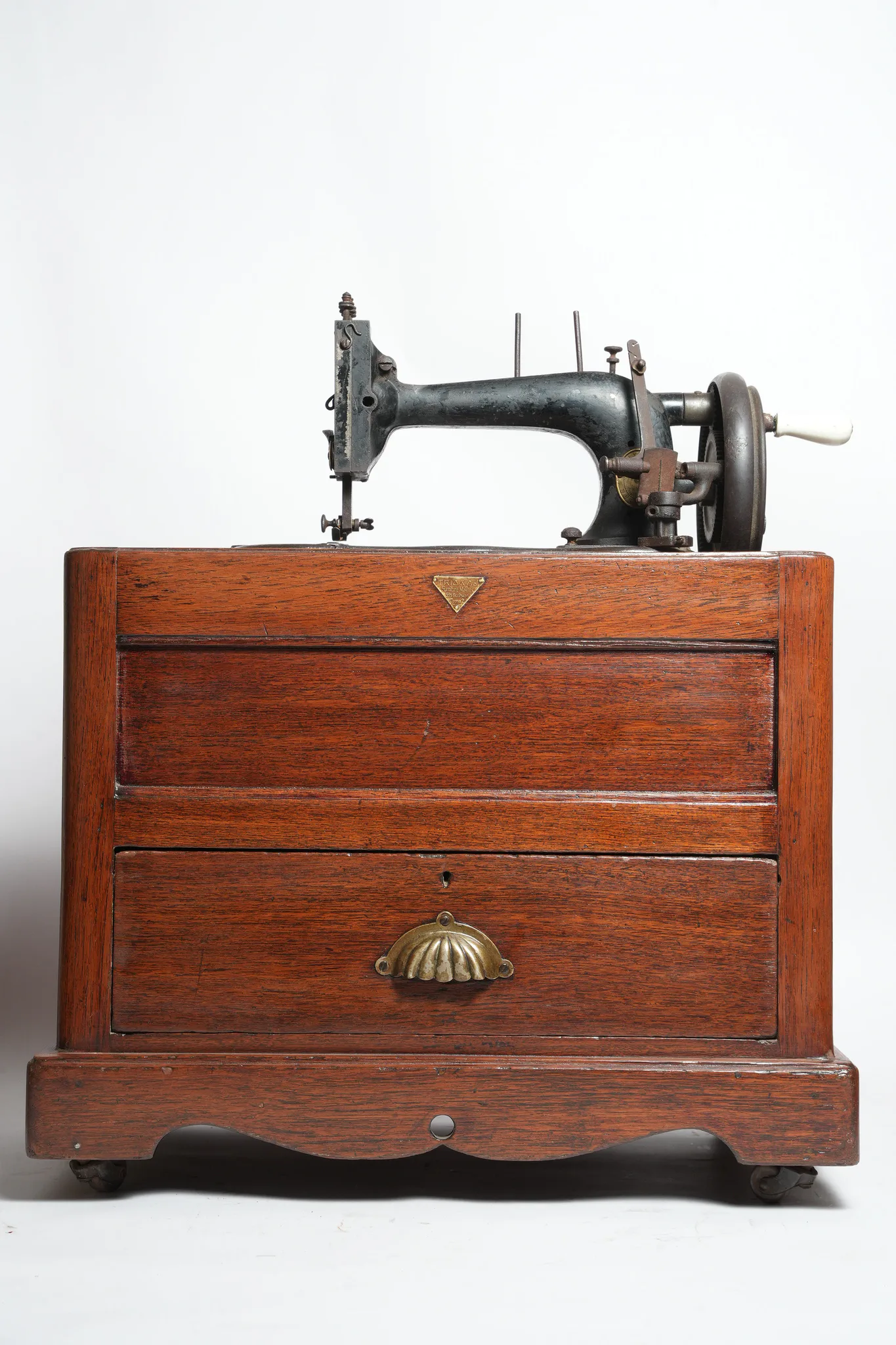
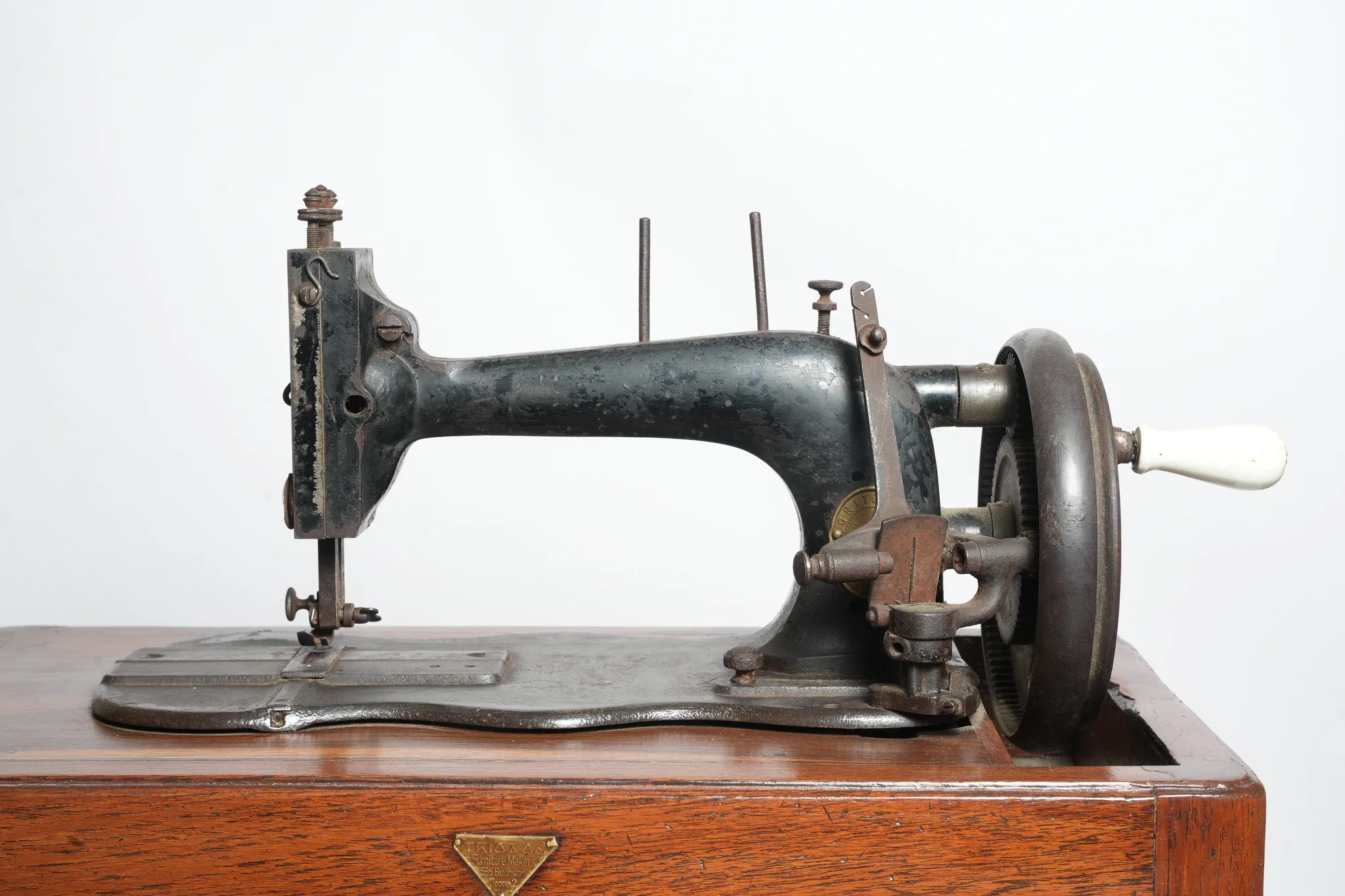
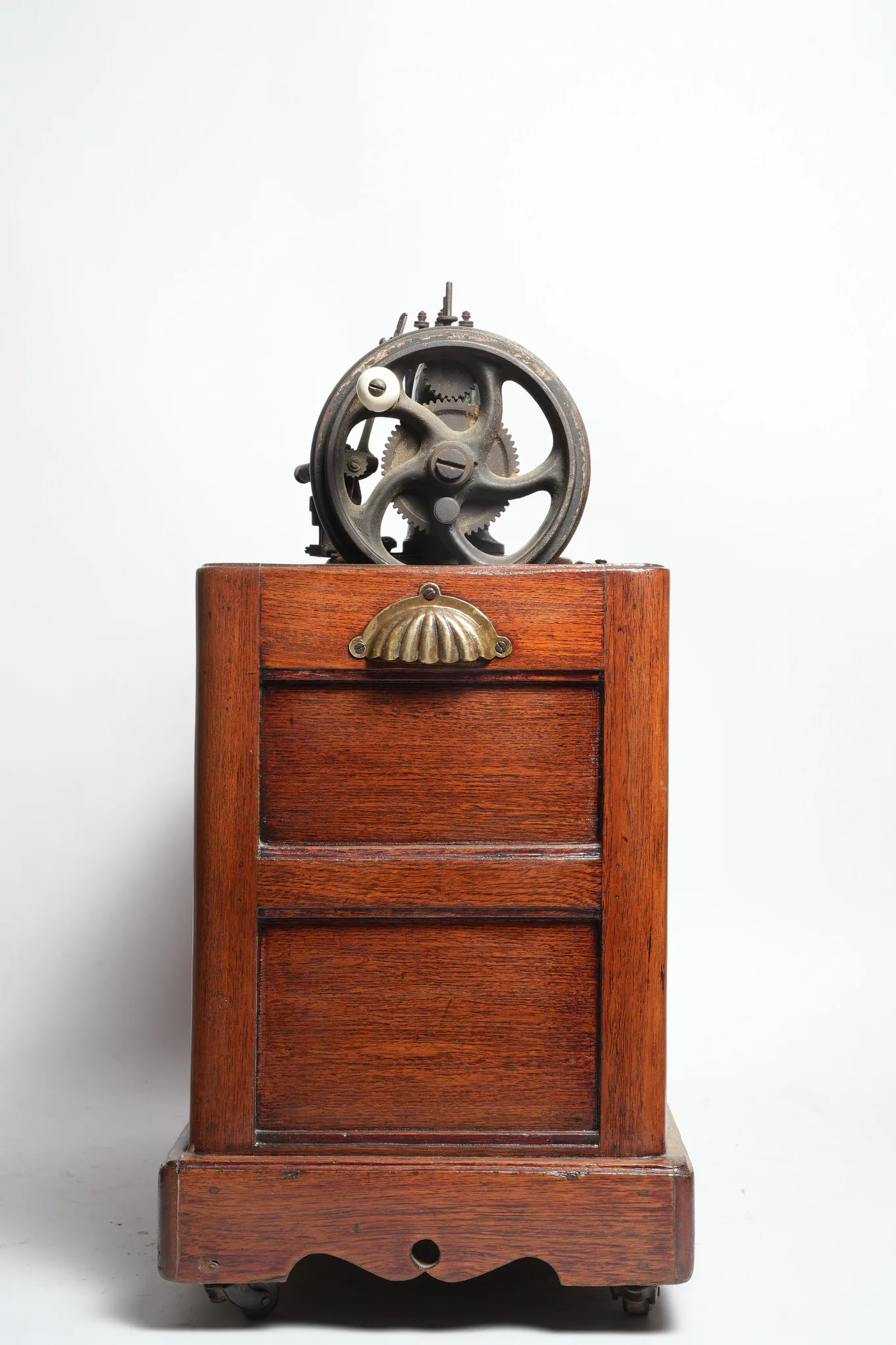
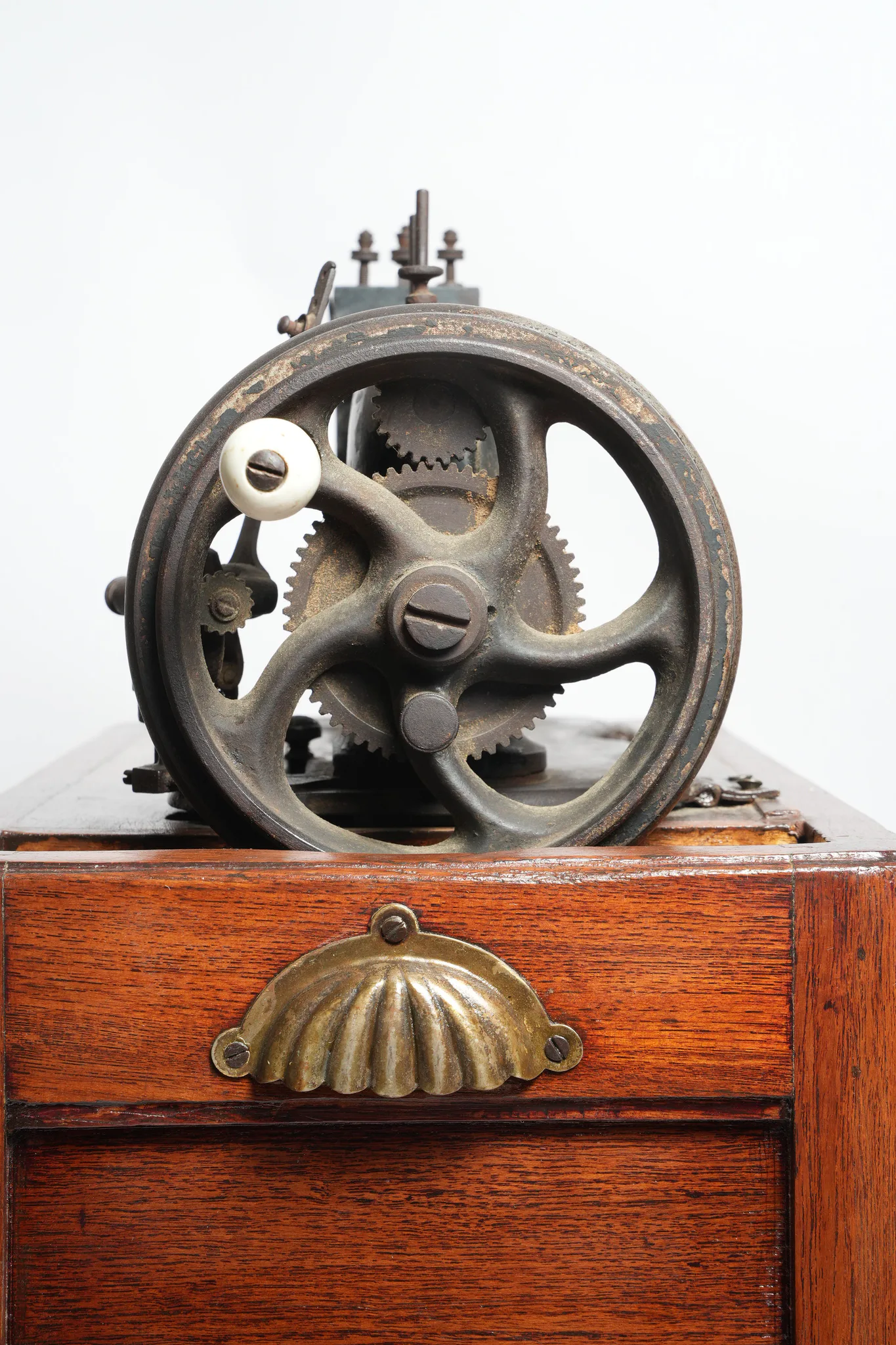
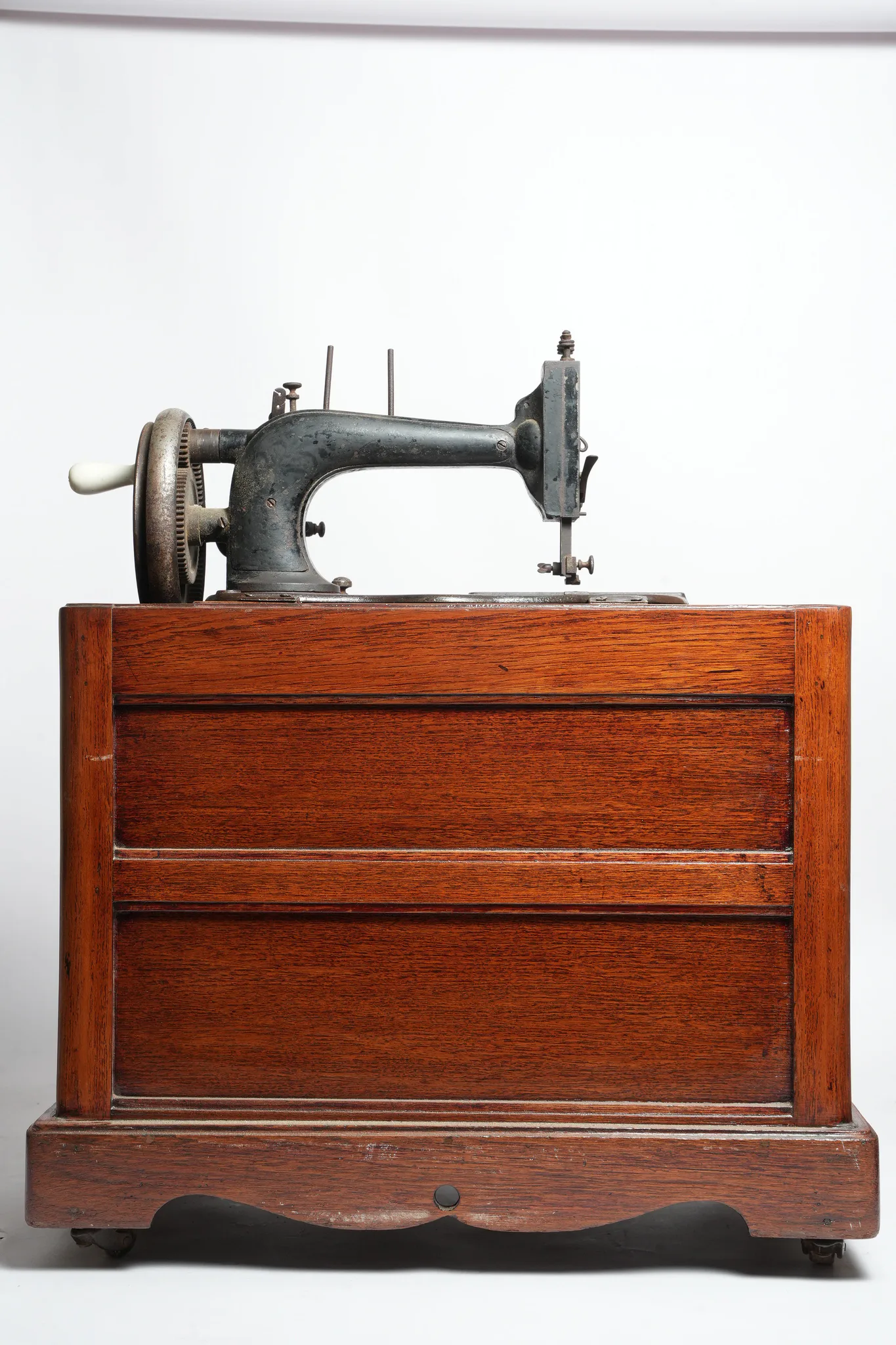
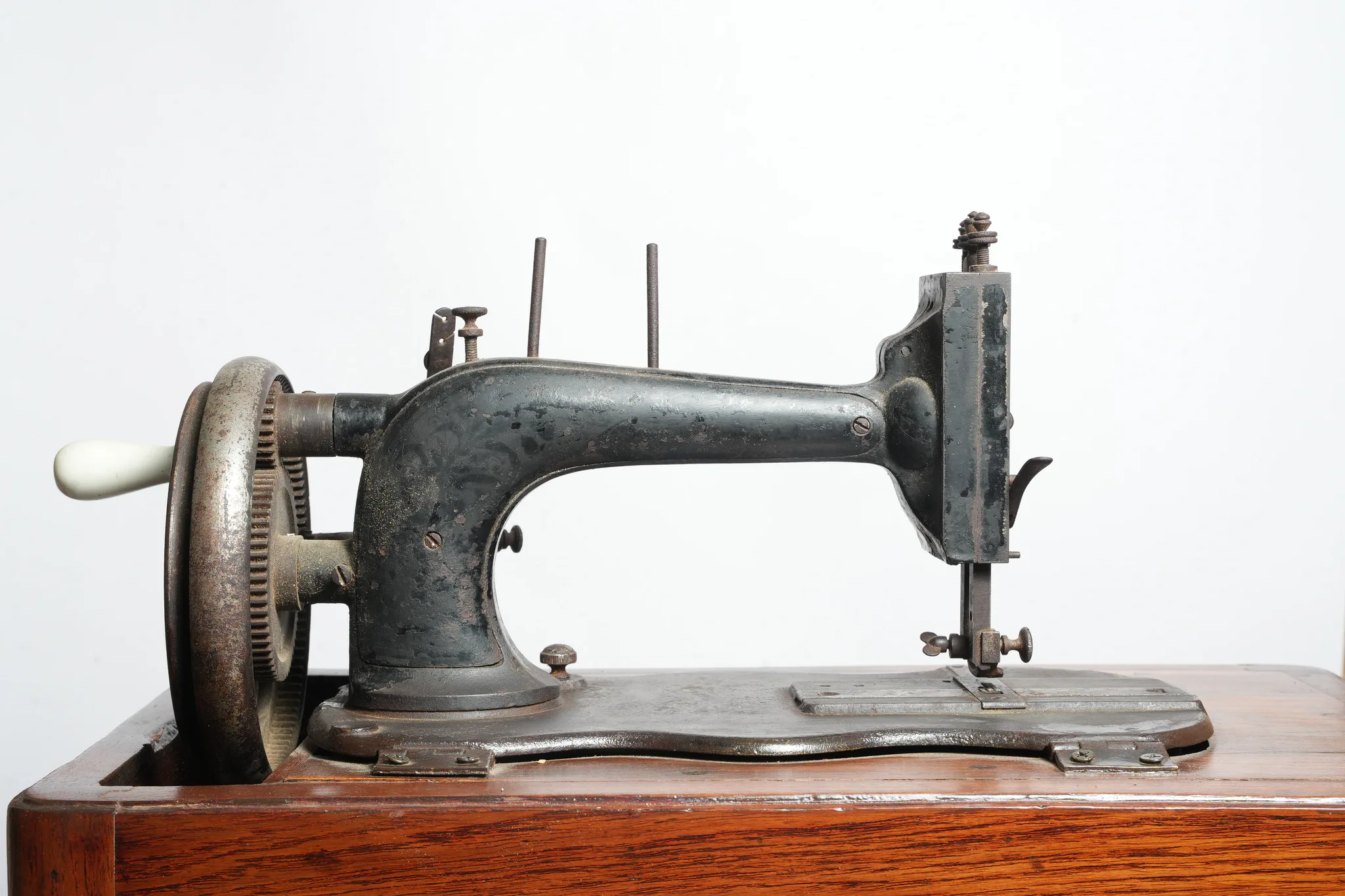
This antique Gritzner hand-crank sewing machine features a traditional cast iron fiddle-shaped bed and transverse shuttle mechanism. Mounted on a bespoke wooden cabinet bearing a brass plaque from Poona furniture maker Tria & Co., it retains its gear-driven hand wheel with a white porcelain handle. The machine displays authentic patina, exposed mechanical linkages, and twin top spool spindles.
Features the iconic serpentine cast-iron bed inspired by Victorian Singer No. 12 and Saxonia designs.
Operated via a side-mounted hand wheel geared with an ergonomic white porcelain turning grip.
Twin vertical steel spool pins mounted along the top of the cast iron arm for winding and threading.
Fitted into a hardwood base made by colonial-era furniture makers Tria & Co. in Budhwar Peth, Poona.
Retains the circular brass Gritzner factory medallion fixed to the main vertical pillar.
The front cabinet door is accented with a scalloped cast brass cup handle and period keyhole escutcheon.
Measurements, construction, identity, and seller-supplied details are kept together for direct comparison.
Provenance documentation was not supplied for this specific Gritzner Fiddle-Base Transverse Shuttle Sewing Machine; this listing is based on the supplied photographs only.
Imported European sewing machine mechanisms were frequently cased by local Indian artisans, as evidenced by the triangular Tria & Co. brass plaque from Poona visible on the rich hardwood cabinet.
Built for households without electrical power, this Gritzner machine's heavy geared flywheel and smooth porcelain grip allowed precise, durable stitch control during everyday garment construction and repair. That specificity gives the buyer a traceable, emotionally resonant piece of Germany design history rather than a generic decorative substitute.
Max Carl Gritzner establishes his sewing machine factory in Durlach, Germany, soon becoming one of Europe's largest manufacturers.
Gritzner achieves massive international export success with improved transverse shuttle models built on fiddle-shaped bases.
European sewing machines are widely exported to colonial India, where local craftsmen construct bespoke hardwood cabinets.
Following a major plant fire, Gritzner merges with Kayser, transitioning production to modernized rotary hook models.
The cast iron sewing machine exhibits surface oxidation, finish wear, and age-consistent paint loss across its arm and base. The wooden cabinet shows minor surface scuffs, nicks, and typical wood aging, while the brass retailer plaque and shell drawer pull retain authentic tarnish.
Black lacquer on cast iron body shows significant flaking, wear, and patches of light surface rust.
The gear assembly and crank show mechanical surface oxidation, while the white porcelain handle remains intact.
Stained hardwood cabinet shows stable joints, light abrasions along edges, and intact panel construction.
Brass Gritzner machine emblem and Tria & Co. triangular retailer plaque are intact with natural age tarnish.
Inspected, photographed, and packed with its condition report.
Custom-fit protective packing with tracked, insured courier service.
Return requests are accepted within fourteen days of confirmed delivery.
Prepared for courier handoff within three to five business days.
Contact the seller for more information or to discuss this object.