
01
Subcontinental Broadcast Dial
Features historic broadcast stations across India and Pakistan, including Delhi, Bombay, Karachi, and Peshawar.
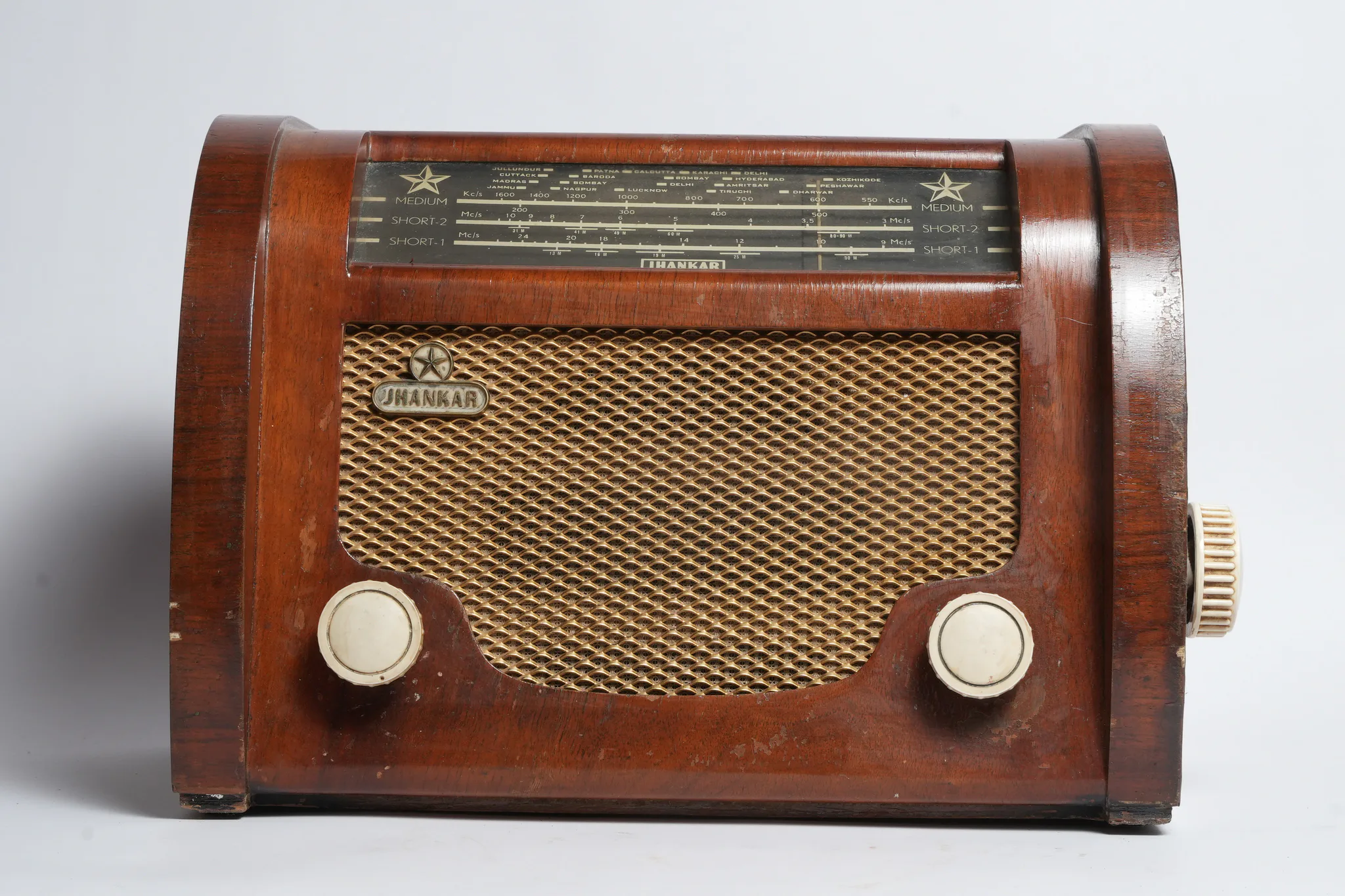
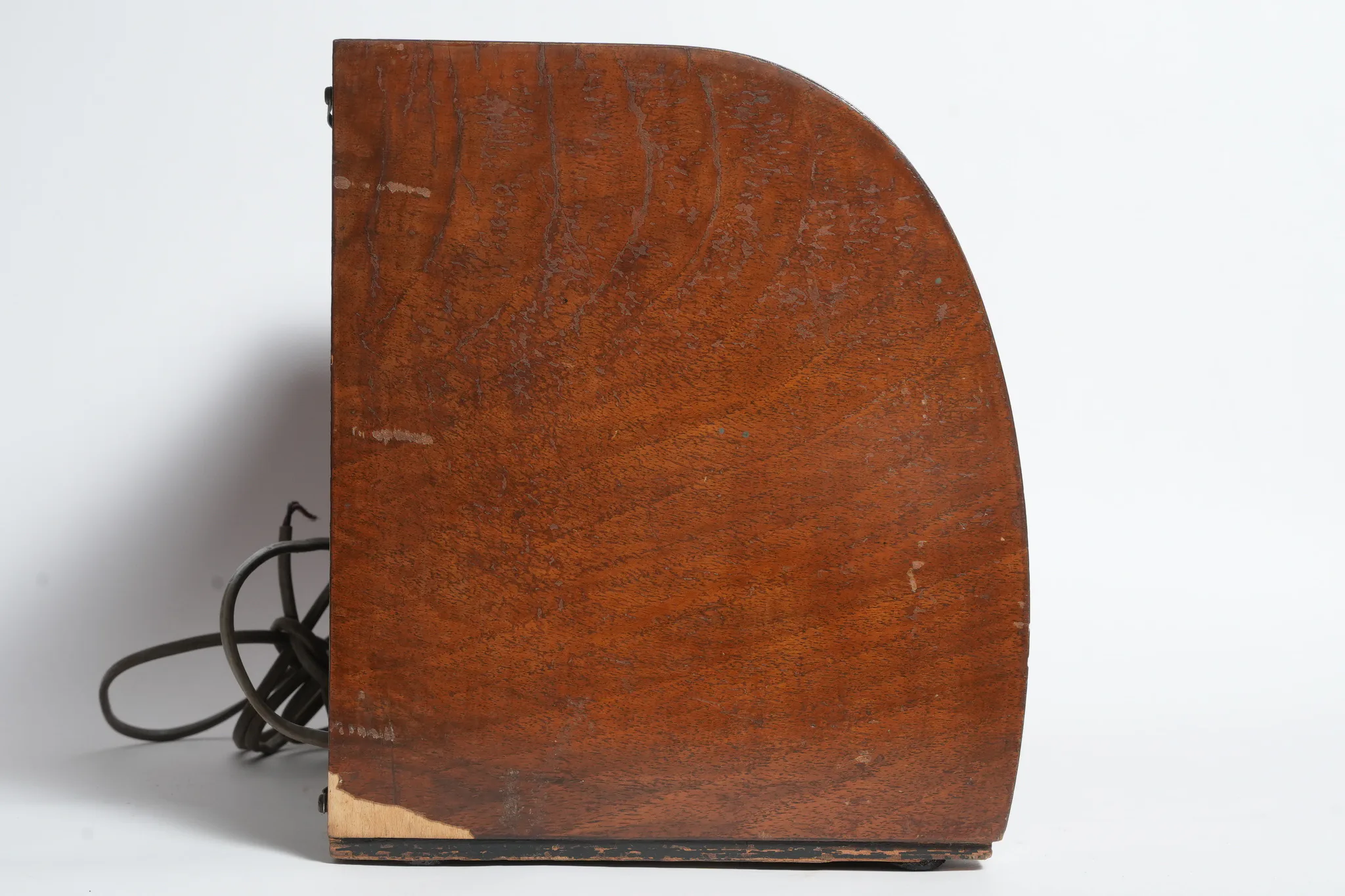
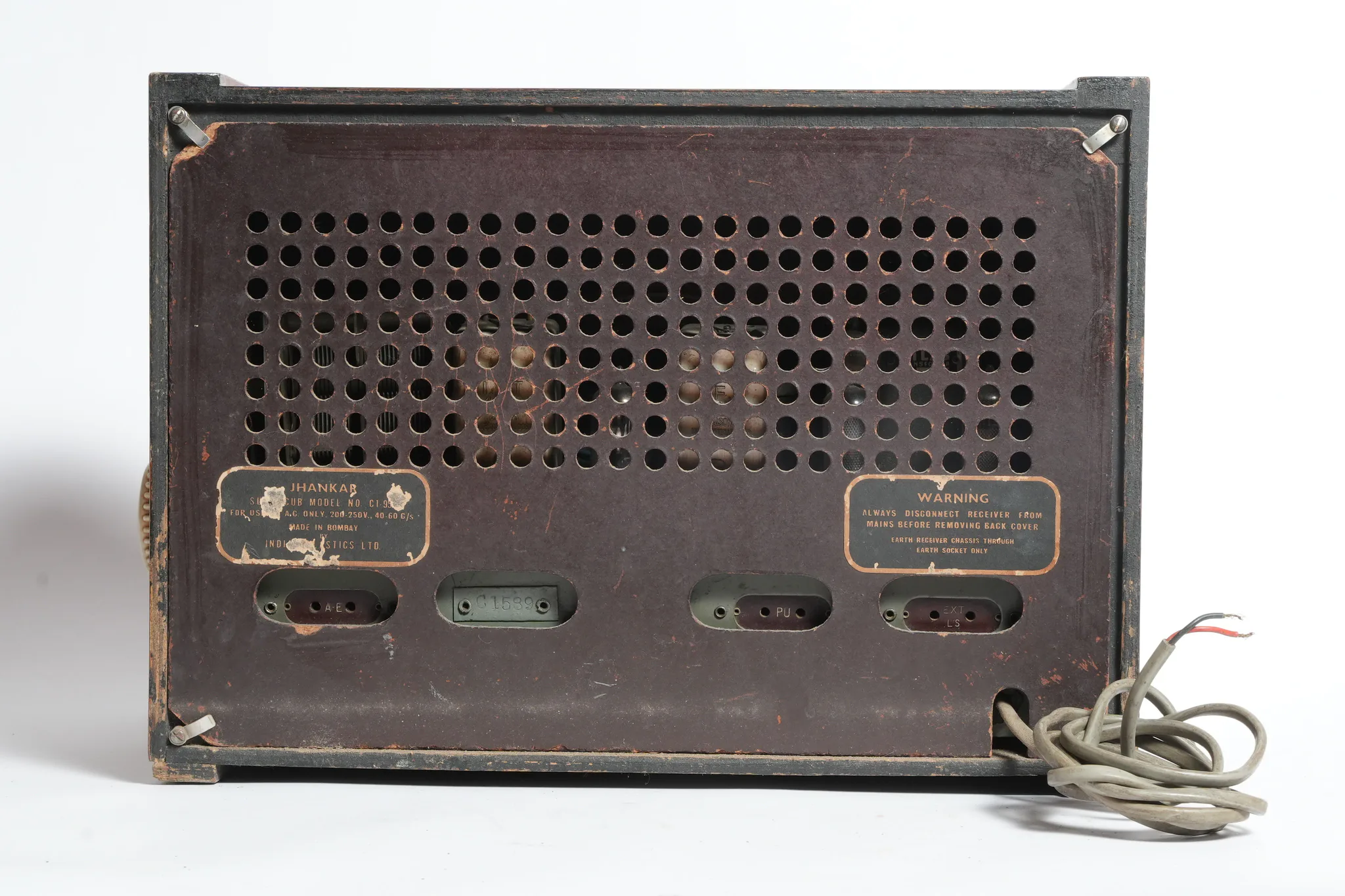
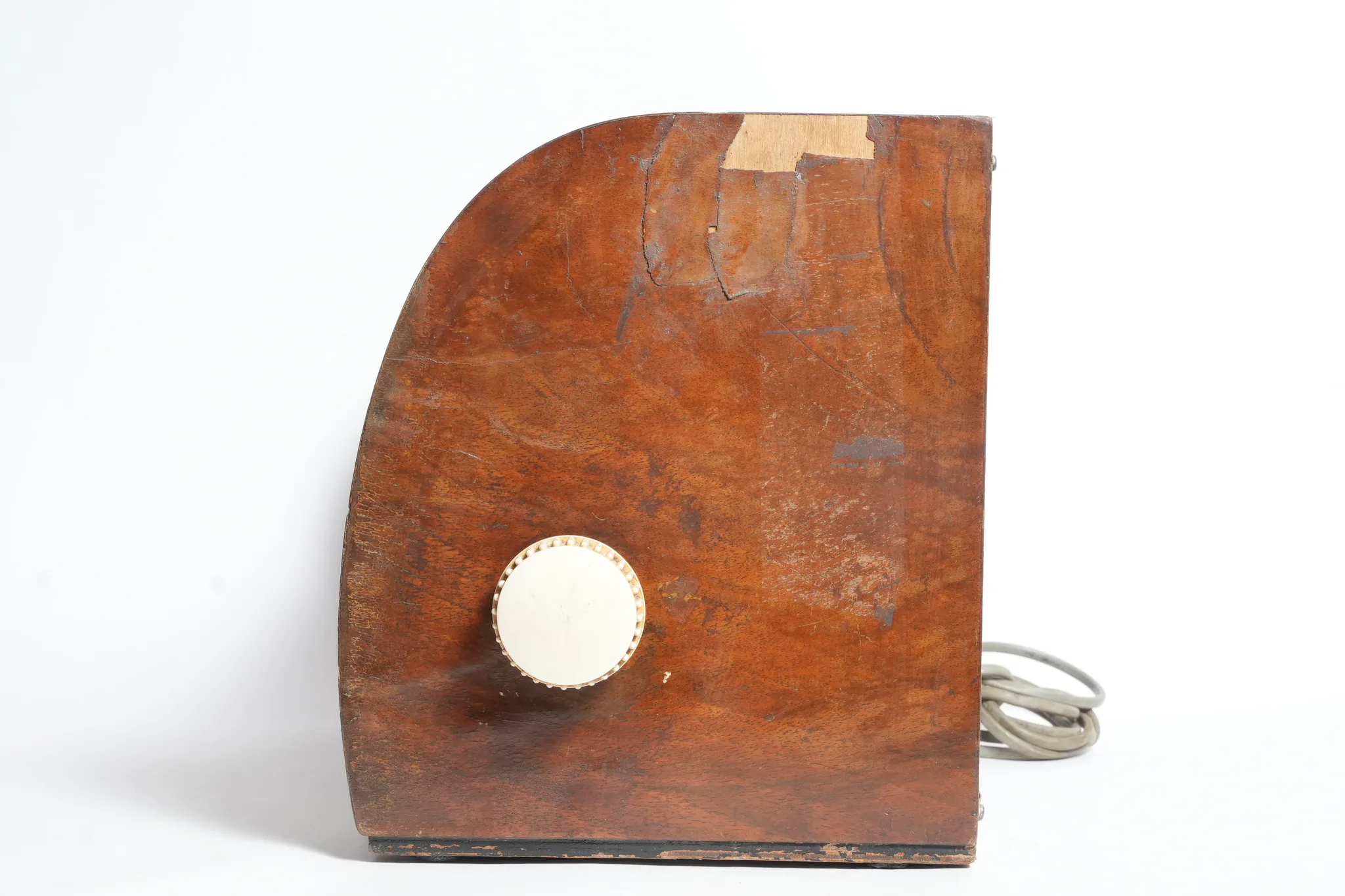
Housed in a rich curved-front wooden cabinet, this Jhankar table radio features a dual-star glass tuning scale displaying medium and two shortwave frequency bands alongside regional South Asian broadcasting stations. The lower front section incorporates two cream-colored control knobs positioned below an intricate stamped lattice speaker grille bearing the signature Jhankar star badge. A prominent ribbed tuning wheel is mounted on the right side of the cabinet for station selection.
Features historic broadcast stations across India and Pakistan, including Delhi, Bombay, Karachi, and Peshawar.
Configured for Medium Wave (Kc/s) alongside Short-1 and Short-2 frequency bands for long-distance reception.
Constructed with distinctive rounded shoulder arches typical of mid-century Art Deco and streamline radio styling.
Displays the raised metal star medallion on the grille and matching five-point star motifs on the dial glass.
Features an ornate pressed scale-pattern metallic mesh protecting the internal dynamic loudspeaker.
Equipped with a knurled side-mounted selector wheel for smooth and precise frequency adjustment.
Measurements, construction, identity, and seller-supplied details are kept together for direct comparison.
Provenance documentation was not supplied for this specific Jhankar Three-Band Wooden Valve Table Radio; this listing is based on the supplied photographs only.
The station names imprinted on the glass dial reflect mid-century broadcasts that united diverse regions. Visible in the front photograph, these historic station callouts document the dawn of independent broadcasting across India and Pakistan.
Side-profile inspection highlights the elegant curvature of the steam-bent wooden cabinet and authentic patina. The aged veneer tells a multi-decade story of domestic family entertainment gathered around evening wireless news transmissions.
All India Radio dramatically expanded its transmitter network across the subcontinent, spurring demand for domestic multi-band receivers.
The Jhankar brand was introduced to the domestic Indian market, producing valve radios designed specifically for tropical reception.
Jhankar released table models featuring medium-wave and dual shortwave bands marked with major metropolitan transmission centers.
Bulky wooden valve receivers were gradually phased out across South Asian manufacturing in favor of portable transistor models.
The wooden cabinet exhibits authentic age-related wear including surface scuffs, localized finish crazing, and a distinct patch of veneer loss at the lower rear side corner. The printed glass tuning dial and metallic speaker grille remain intact and well-preserved with clear lettering. Rear wiring shows vintage insulated cabling with exposed lead ends, and all knobs appear intact with mild surface patination.
A triangular section of the wood veneer has chipped away at the lower corner of the side panel, revealing the lighter substrate beneath.
Surface scratches, contact marks, and lacquer checking are visible across the top curve and lower wooden front rail.
The front glass scale is free of visible cracks, retaining crisp white station markings, frequency scales, and star graphics.
Both front cream-toned knobs and the side-mounted dial wheel are intact with minor surface discoloration; the grille mesh is well-seated.
Inspected, photographed, and packed with its condition report.
Custom-fit protective packing with tracked, insured courier service.
Return requests are accepted within fourteen days of confirmed delivery.
Prepared for courier handoff within three to five business days.
Contact the seller for more information or to discuss this object.