
01
Vesta VS III Model
Prominently lettered across the horizontal arm with original factory gothic script lettering.
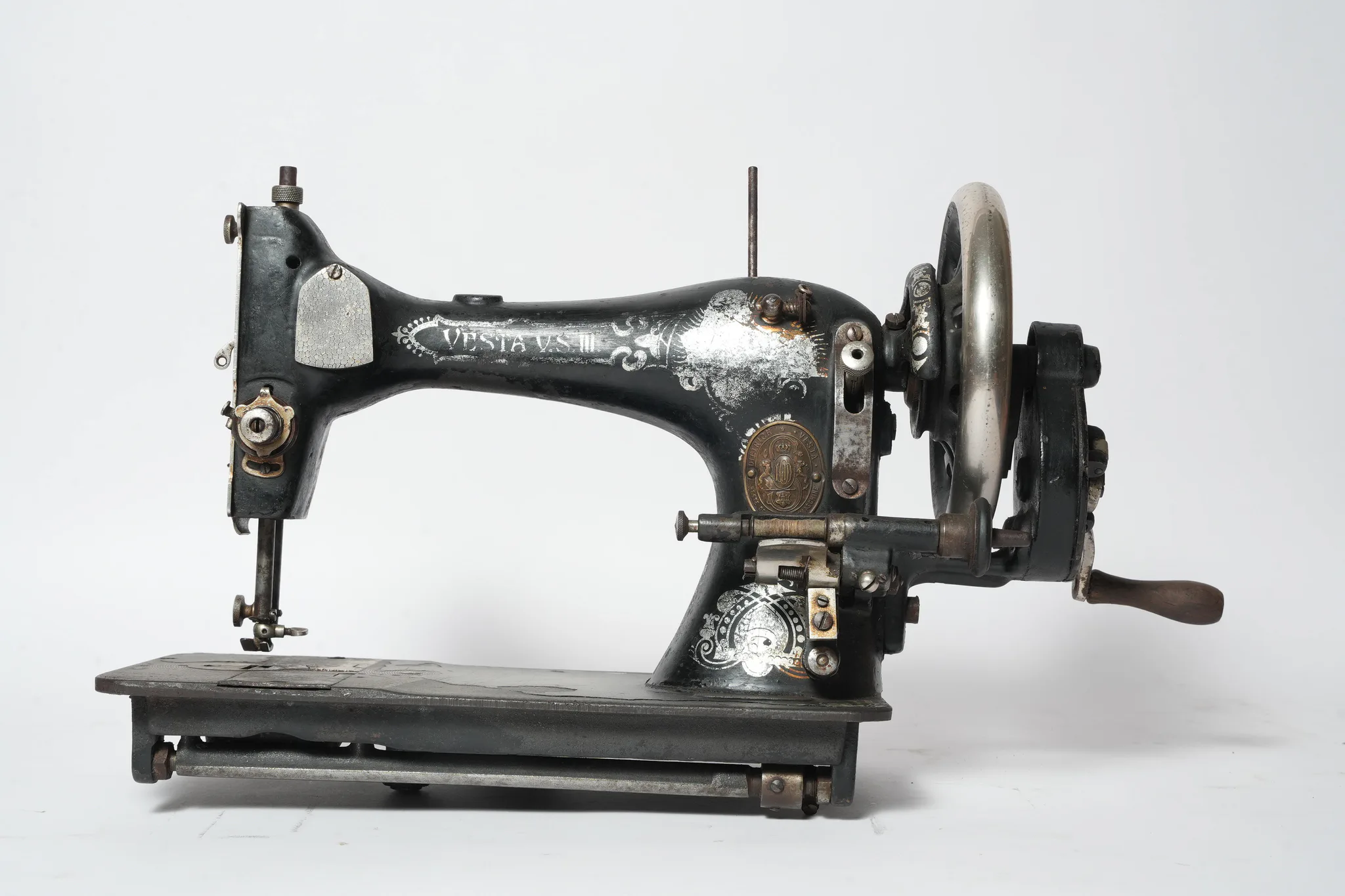
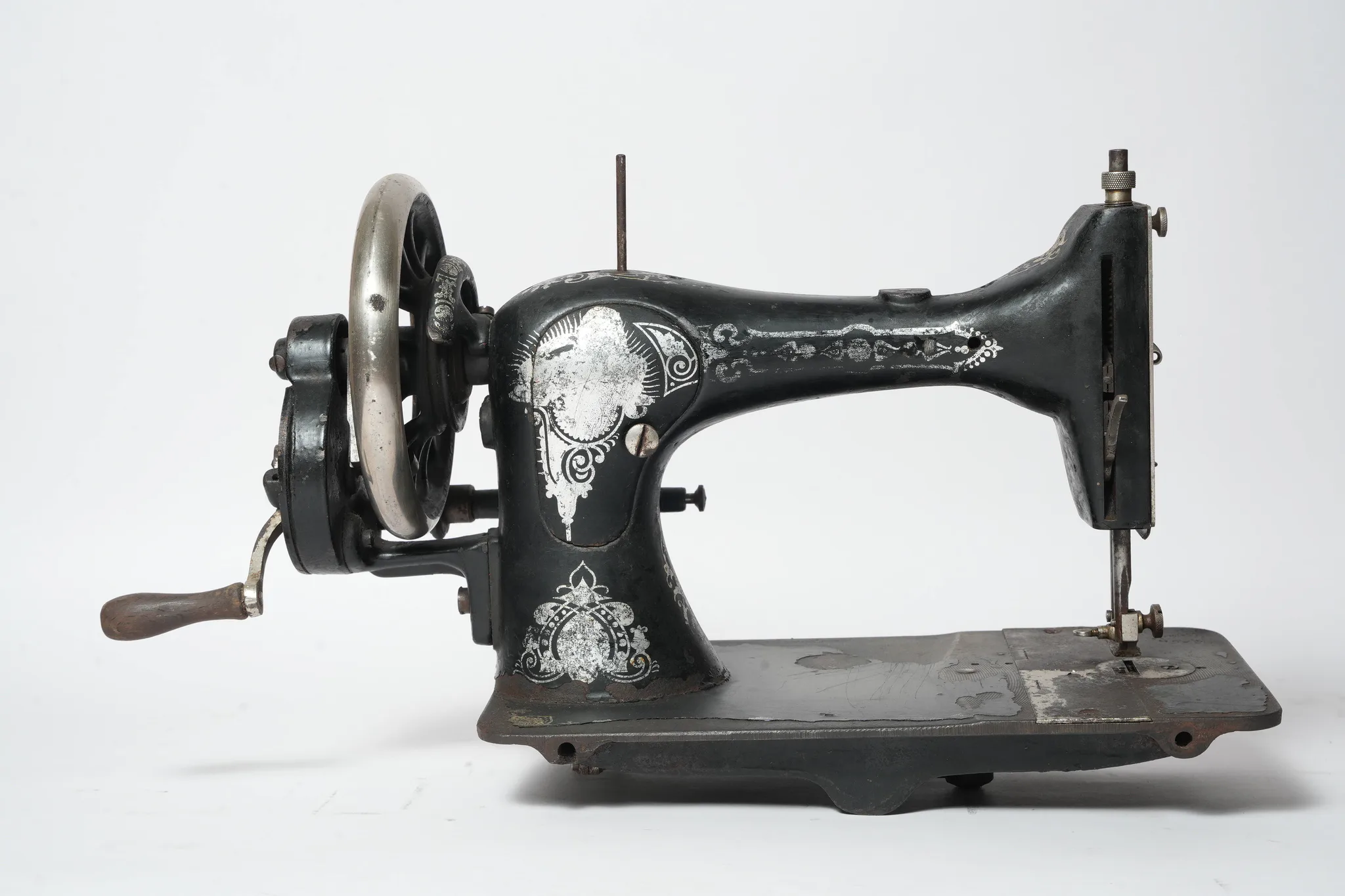
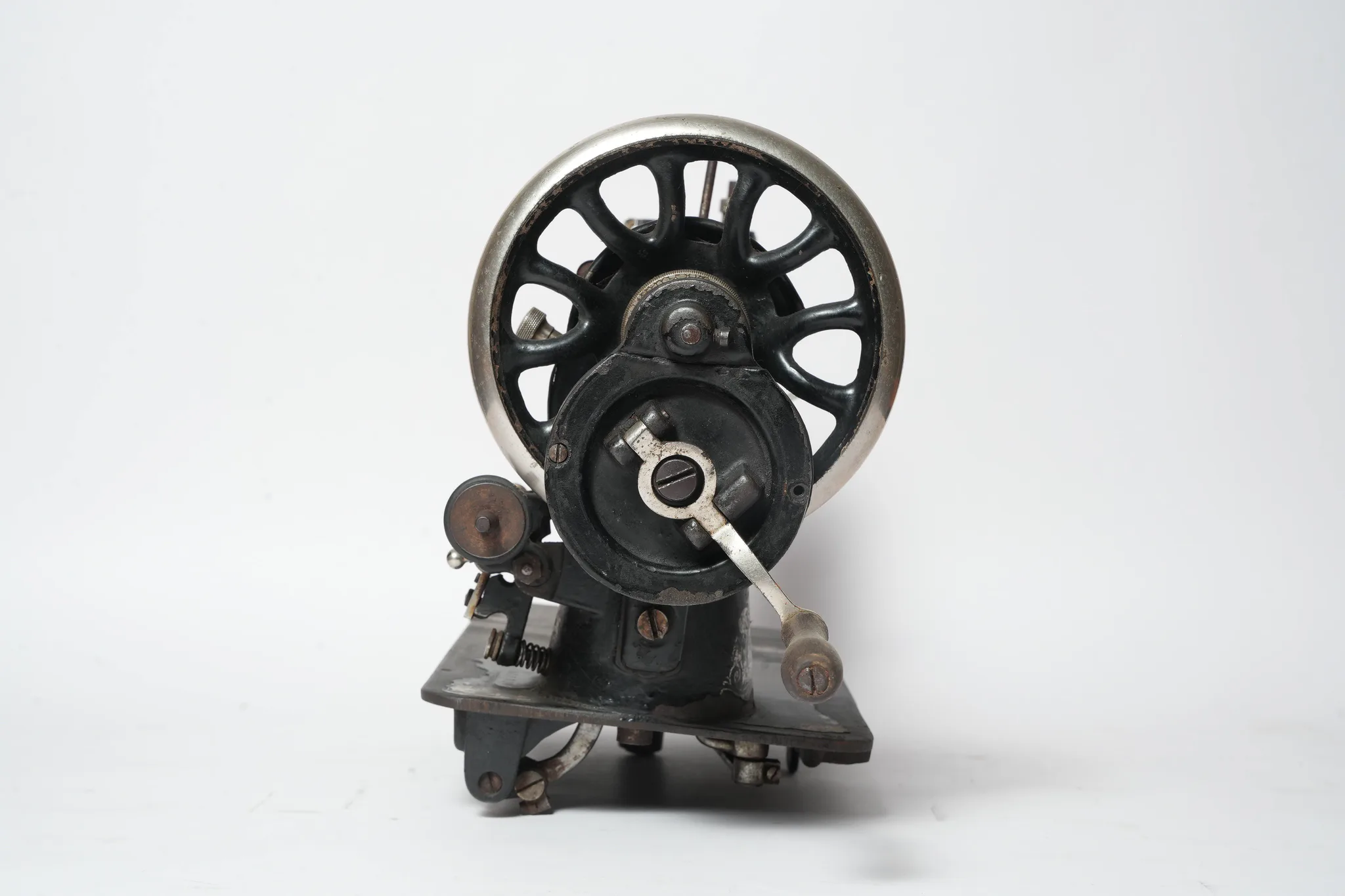
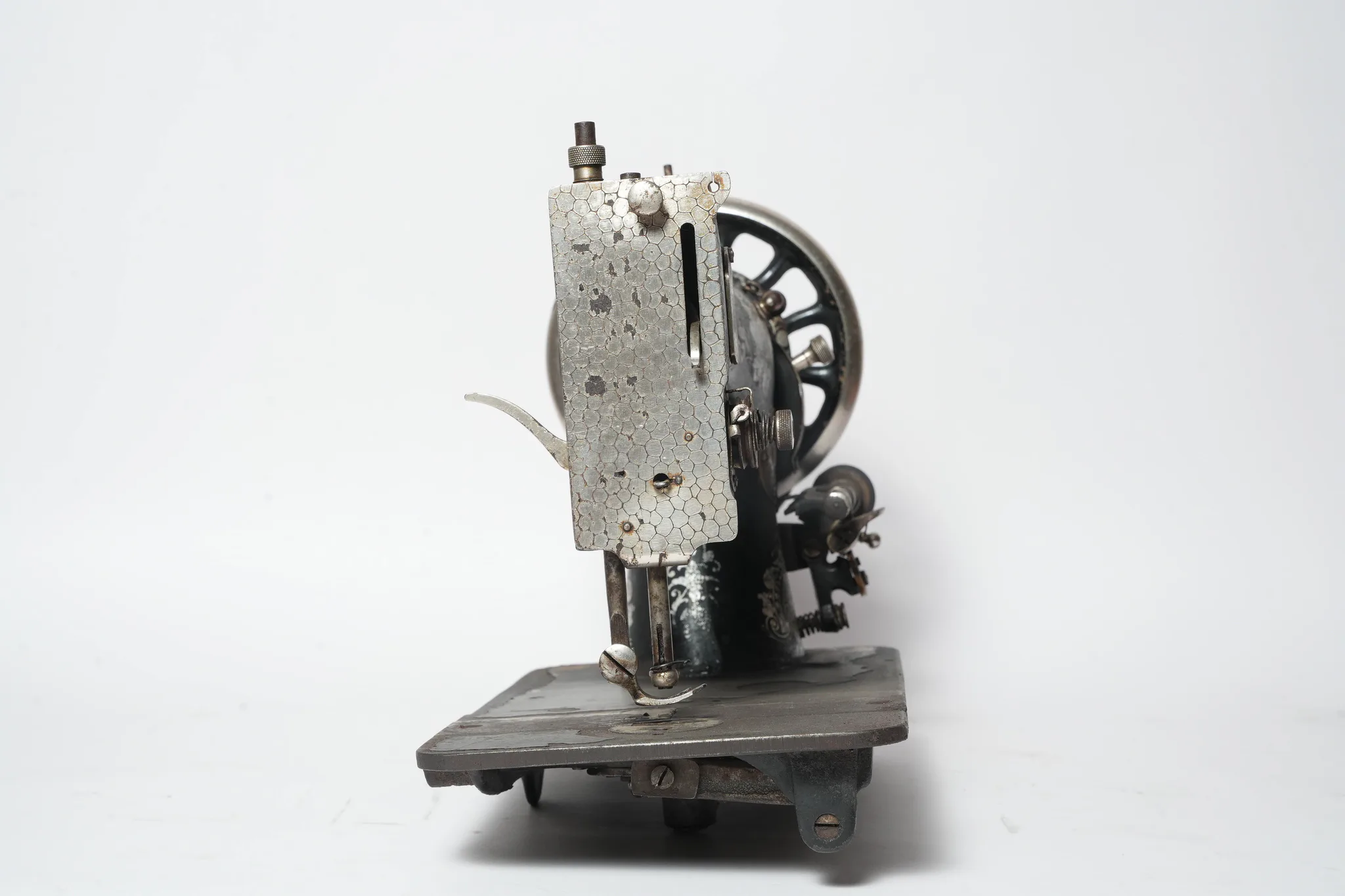
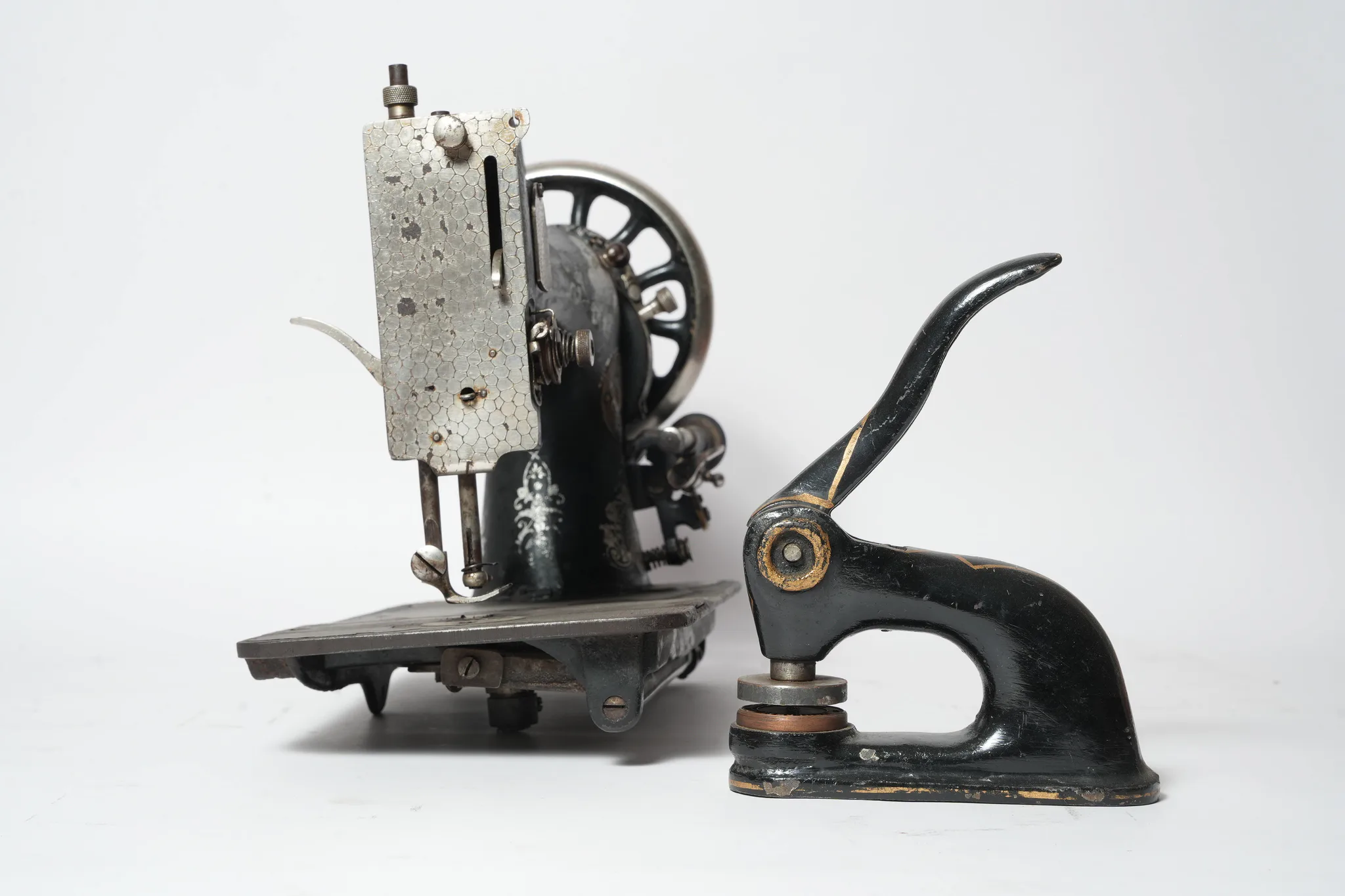
Manufactured in Altenburg, Germany, this Vesta VS III features a black japanned cast-iron body adorned with silver-toned floral transfer decals. It is configured with a side-mounted hand-crank drive, spoked balance wheel, vibrating shuttle mechanism, and an applied brass maker's medallion on the pillar.
Prominently lettered across the horizontal arm with original factory gothic script lettering.
Features an authentic embossed brass emblem fixed to the lower pillar identifying Altenburg manufacture.
Equipped with a rear-mounted gear-driven crank handle and turned wooden grip for standalone manual operation.
Heavy cast spoked balance wheel with a nickel-plated rim provides rotational inertia during sewing.
Pillar-mounted mechanical bobbin winding assembly driven directly off the balance wheel hub.
Substantial cast-iron head and bed designed for long-term domestic duty or portable wooden base mounting.
Measurements, construction, identity, and seller-supplied details are kept together for direct comparison.
Provenance documentation was not supplied for this specific L.O. Dietrich Vesta VS III Hand-Crank Sewing Machine; this listing is based on the supplied photographs only.
Depicted from the front in photograph three, the prominent brass medallion and arm lettering celebrate L.O. Dietrich's Altenburg factory, renowned across Central Europe for durable domestic vibrating shuttle sewing machines before the First World War.
Viewed in profile in photograph two, the geared hand-crank assembly and open-spoked balance wheel freed domestic tailors from treadle tables, delivering reliable mechanical lockstitching entirely independent of household electrical connections or fixed furnishings.
Leopold Oskar Dietrich co-founds a sewing machine workshop in Altenburg, establishing the Vesta manufacturing lineage.
The company solidifies the Vesta trade name across Europe for domestic vibrating shuttle lockstitch machines.
Dietrich refines its vibrating shuttle lineup with improved winder mechanisms and distinct ornate livery as the VS III.
Following wartime disruptions, the Altenburg works transition into state-owned manufacturing under the VEB structure.
The machine displays significant cosmetic wear consistent with age, including extensive rubbing and loss to the silver decorative decals on the arm and pillar. Oxidation and surface tarnish are visible on unpainted steel and nickel-plated components, including the hand-wheel rim and stitch plate. The unit is detached from its original wooden carrying base or treadle cabinet.
The silver-colored ornamental decals show substantial surface abrasion and loss, particularly on the central upright column and arm.
Black japanned enamel exhibits edge chips, minor scratches, and localized paint loss across the bedplate and mounting frame.
The balance wheel rim, faceplate, and slide plates show mild pitting, patina, and loss of original bright plating.
The cast-iron machine head retains its hand-crank assembly and bobbin winder, though the wooden mounting plinth and case cover are absent.
Inspected, photographed, and packed with its condition report.
Custom-fit protective packing with tracked, insured courier service.
Return requests are accepted within fourteen days of confirmed delivery.
Prepared for courier handoff within three to five business days.
Contact the seller for more information or to discuss this object.