
01
Art Deco Silhouette
Features a bold architectural profile with softened corners and a recessed presentation frame around the speaker and dial.
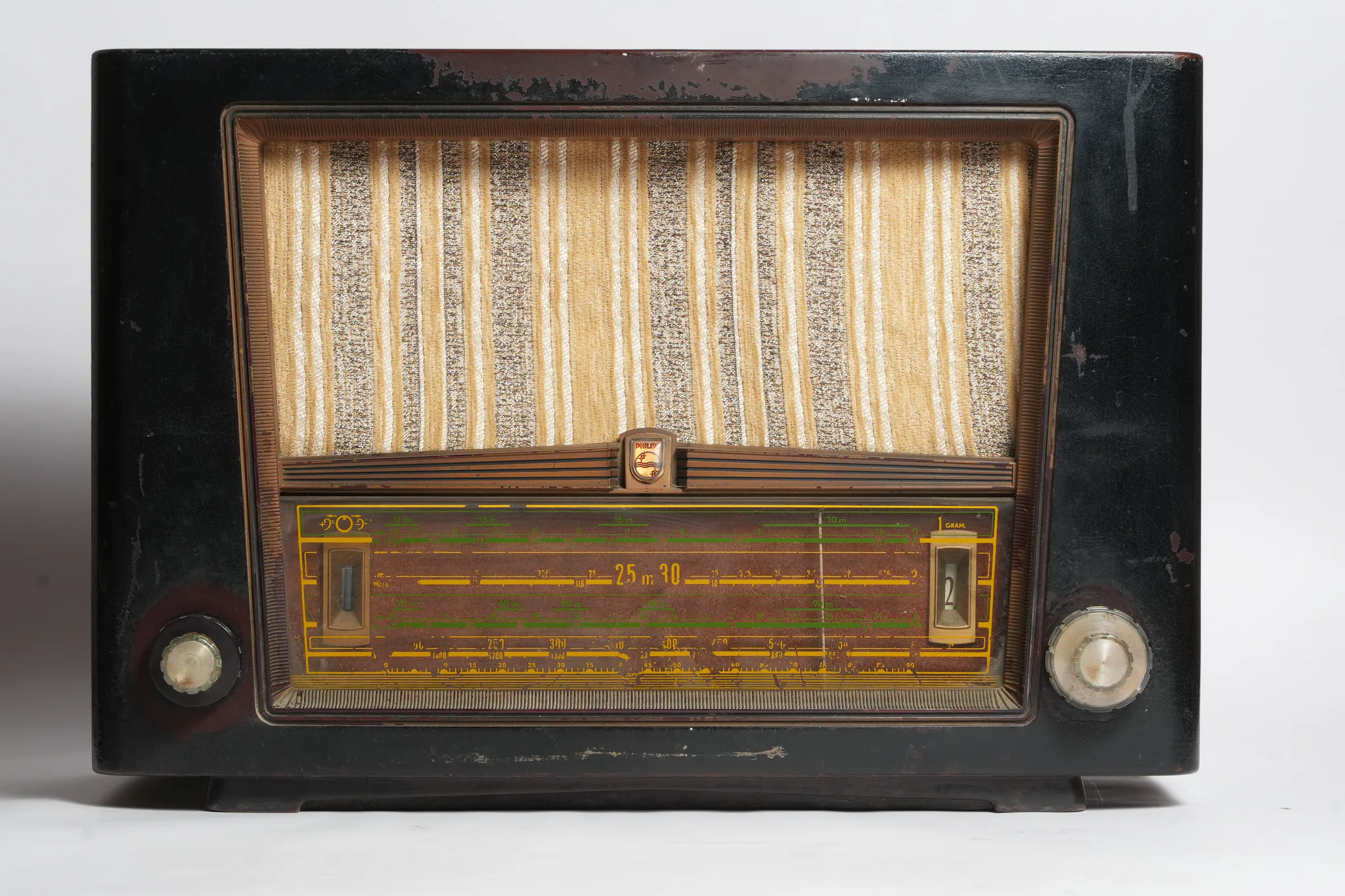
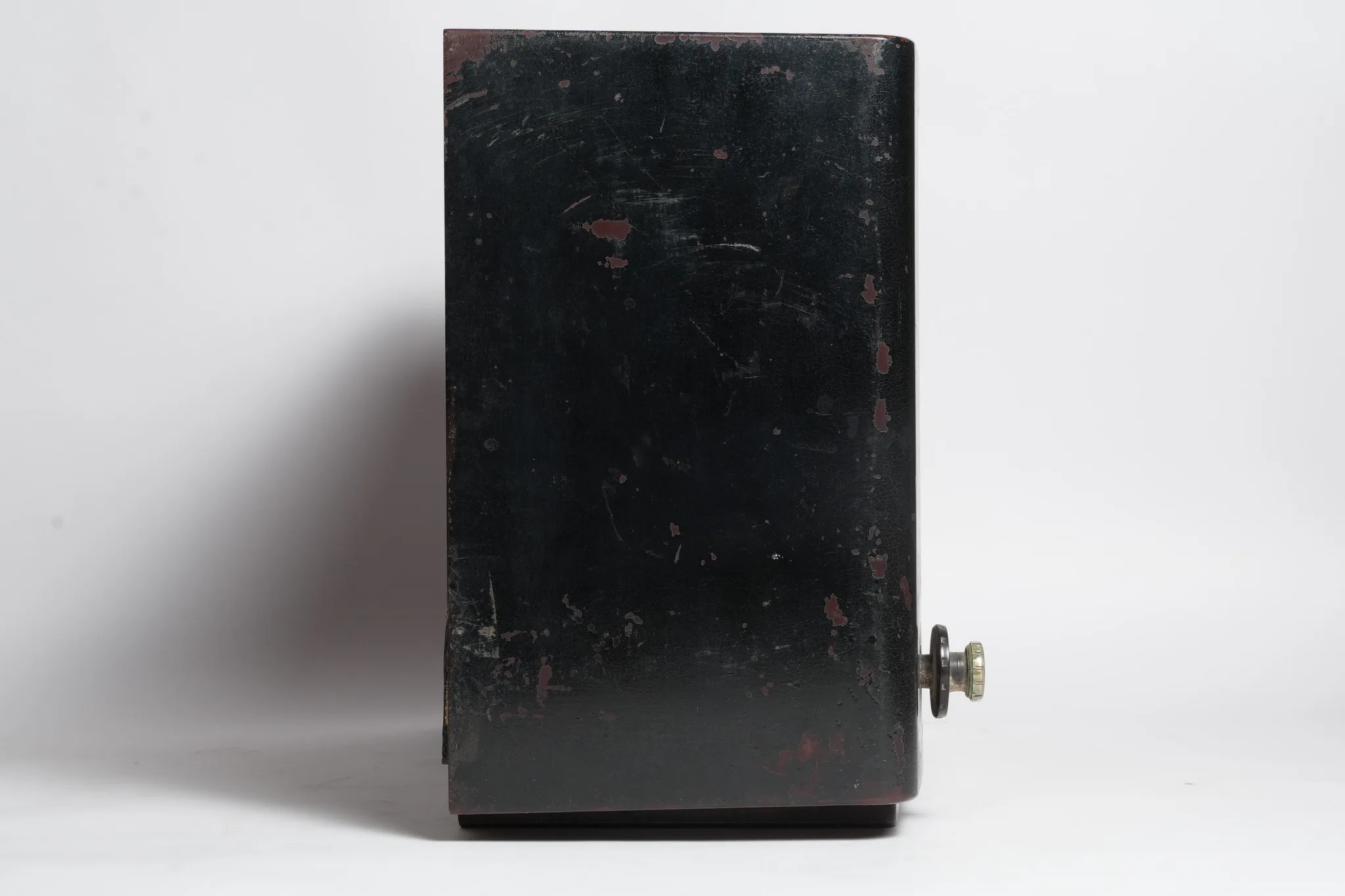
A pre-war Philips Model 680A tabletop tube radio featuring a distinctive horizontal dial glass framed beneath a striped textile speaker grille. The control layout incorporates two front-facing control knobs, a side-mounted fine tuning dial, and twin indicator apertures displaying tone and band selections. The cabinet retains its classic architectural silhouette with an integrated brass Philips crest centered above the tuning scale.
Features a bold architectural profile with softened corners and a recessed presentation frame around the speaker and dial.
Embellished with the classic pre-war Philips shield emblem dividing the fabric speaker section from the glass dial.
Equipped with a knurled side-mounted tuning knob designed for comfortable station searching across crowded shortwave bands.
Mechanical apertures on either side of the dial provide clear feedback for tone adjustments and waveband selection.
Dial includes dedicated calibrations spanning from 11m to 90m alongside standard broadcast frequencies.
Textured multi-tone ribbed textile protects the internal dynamic loudspeaker while complementing the cabinet proportions.
Measurements, construction, identity, and seller-supplied details are kept together for direct comparison.
Provenance documentation was not supplied for this specific Philips 680A Shortwave Tabletop Tube Radio; this listing is based on the supplied photographs only.
Visible on the dial scale, the expansive meter markings enabled listeners in 1939 to pull in distant international broadcasts across multiple high-frequency shortwave bands during an era of rapidly unfolding global history.
The protruding side knob shown in profile allowed fine mechanical adjustment, letting operators rest their arm naturally on the table while navigating narrow frequency gaps without obstructing the front-facing glass indicator.
Philips introduces the 680A series with an innovative side-mounted flywheel tuning mechanism and multi-band coverage.
Export configurations featuring meter-band dials rather than regional European station names are produced for international markets.
Production of civilian radio sets in Eindhoven is heavily curtailed following the outbreak and escalation of World War II.
Surviving 680A receivers remain recognized examples of late Art Deco European radio engineering and industrial design.
The cabinet displays significant wear consistent with age, including scattered paint loss, scratches, and chipped finish exposing reddish under-layers along the edges and top surface. The striped speaker fabric shows slight age toning but remains intact across the grille area. The dial glass and indicator windows are intact with legible green and yellow graphics, and the knobs and side-tuning control remain attached.
Widespread chips, abrasions, and flaking paint across the top, sides, and front bezel showing reddish-brown substrate beneath.
Original vertical-striped woven textile shows uniform age discoloration and minor dusting, free from large tears.
Dial glass is structurally sound with clear frequency markings, shortwave meter bands, and dual mechanical status indicators.
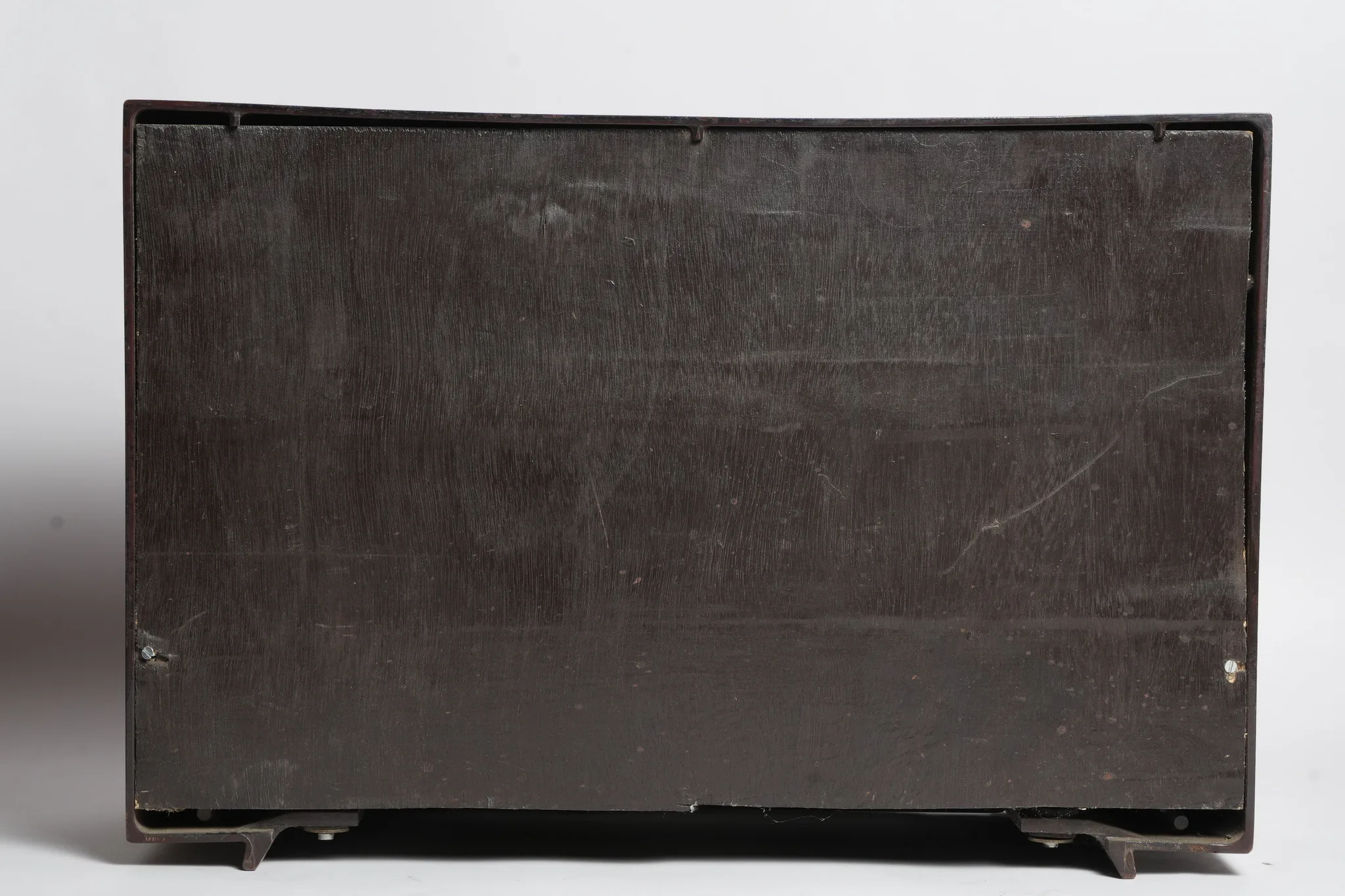
All three exterior knobs and the central Philips shield emblem are present; solid rear wooden panel is secured with screws.
Inspected, photographed, and packed with its condition report.
Custom-fit protective packing with tracked, insured courier service.
Return requests are accepted within fourteen days of confirmed delivery.
Prepared for courier handoff within three to five business days.
Contact the seller for more information or to discuss this object.