
01
Vibrating Shuttle Mechanism
Employs Singer's reliable oscillating bullet-shuttle movement with dual metal bed slide plates for bobbin access.
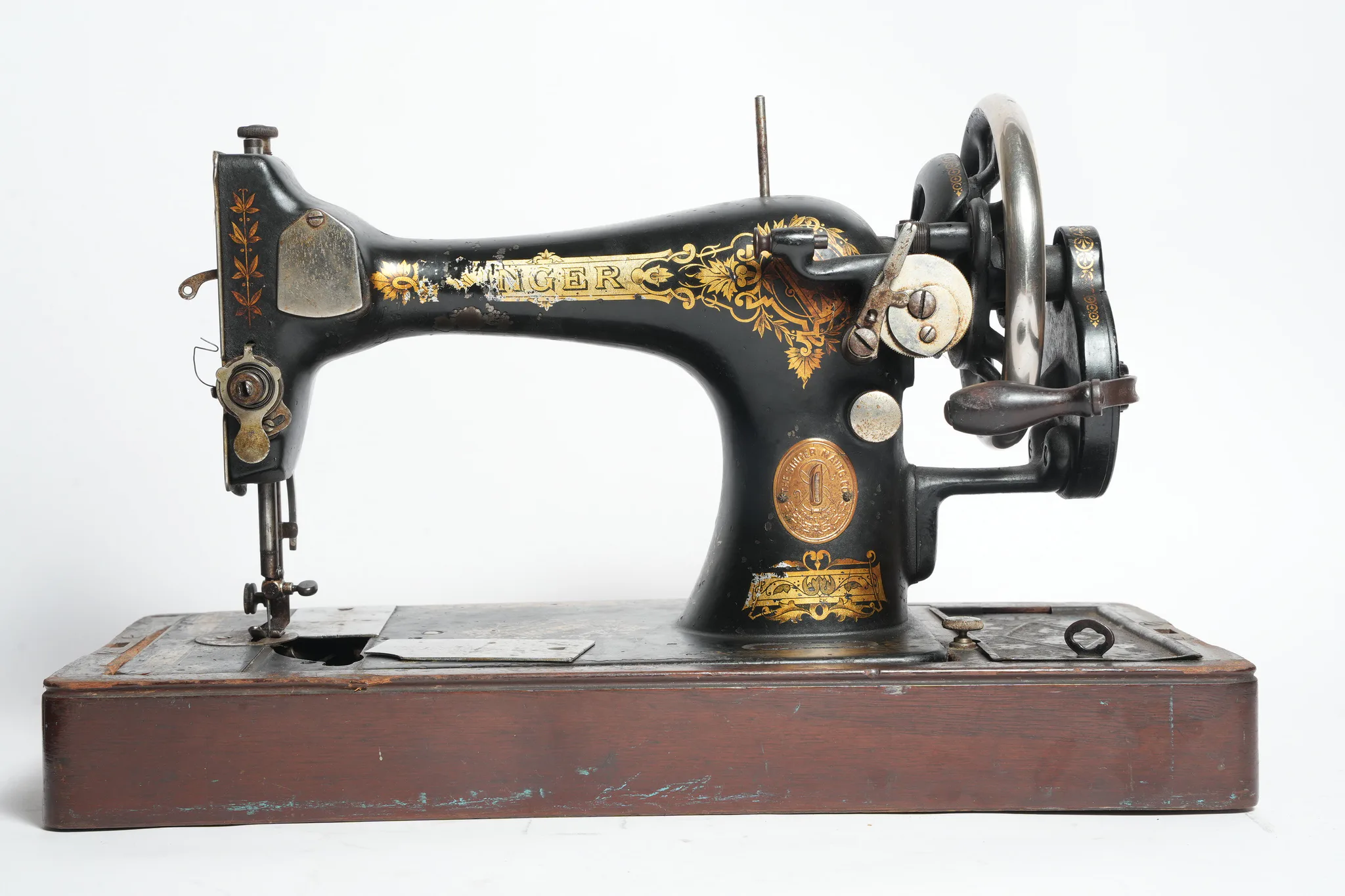
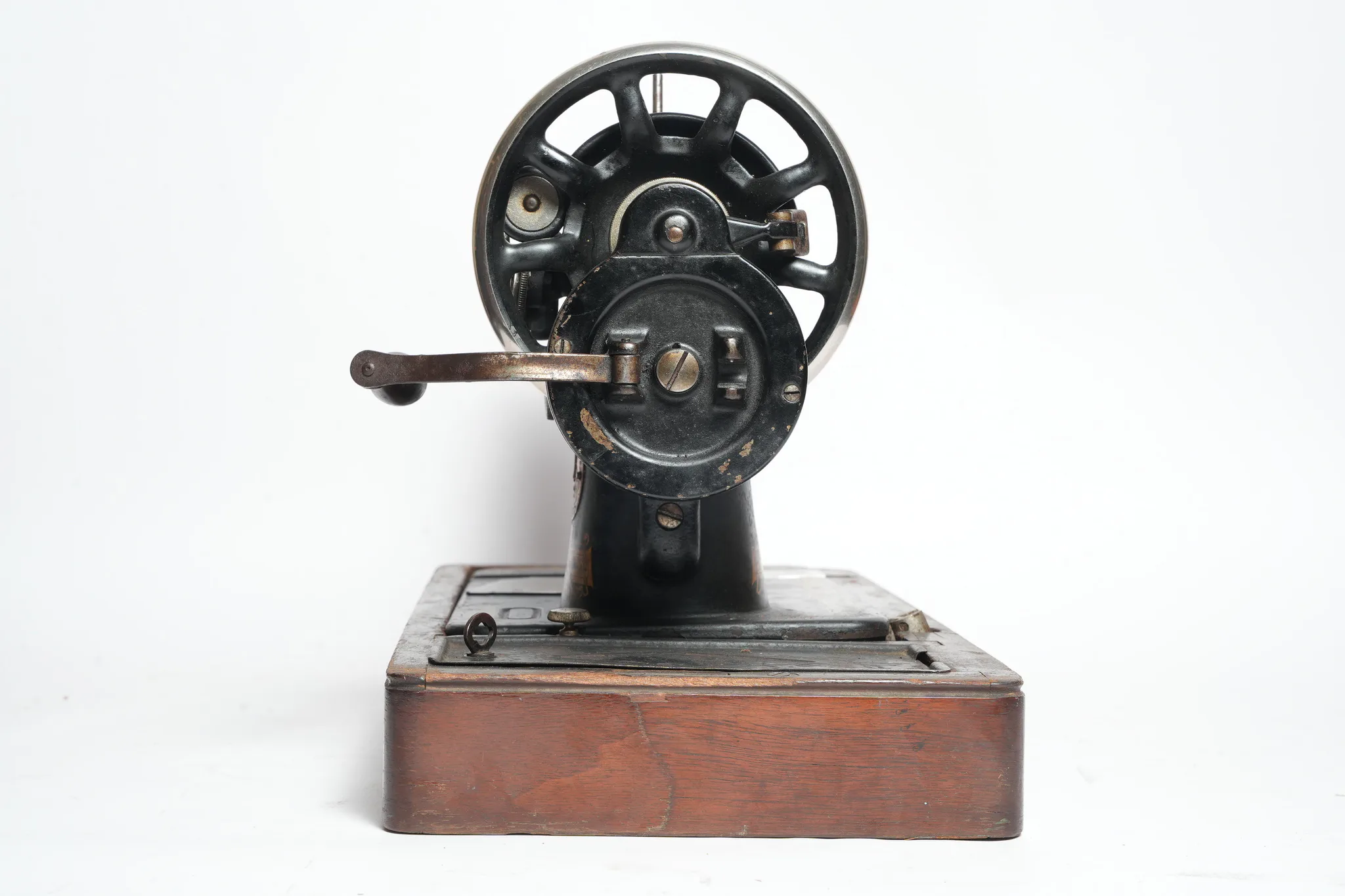
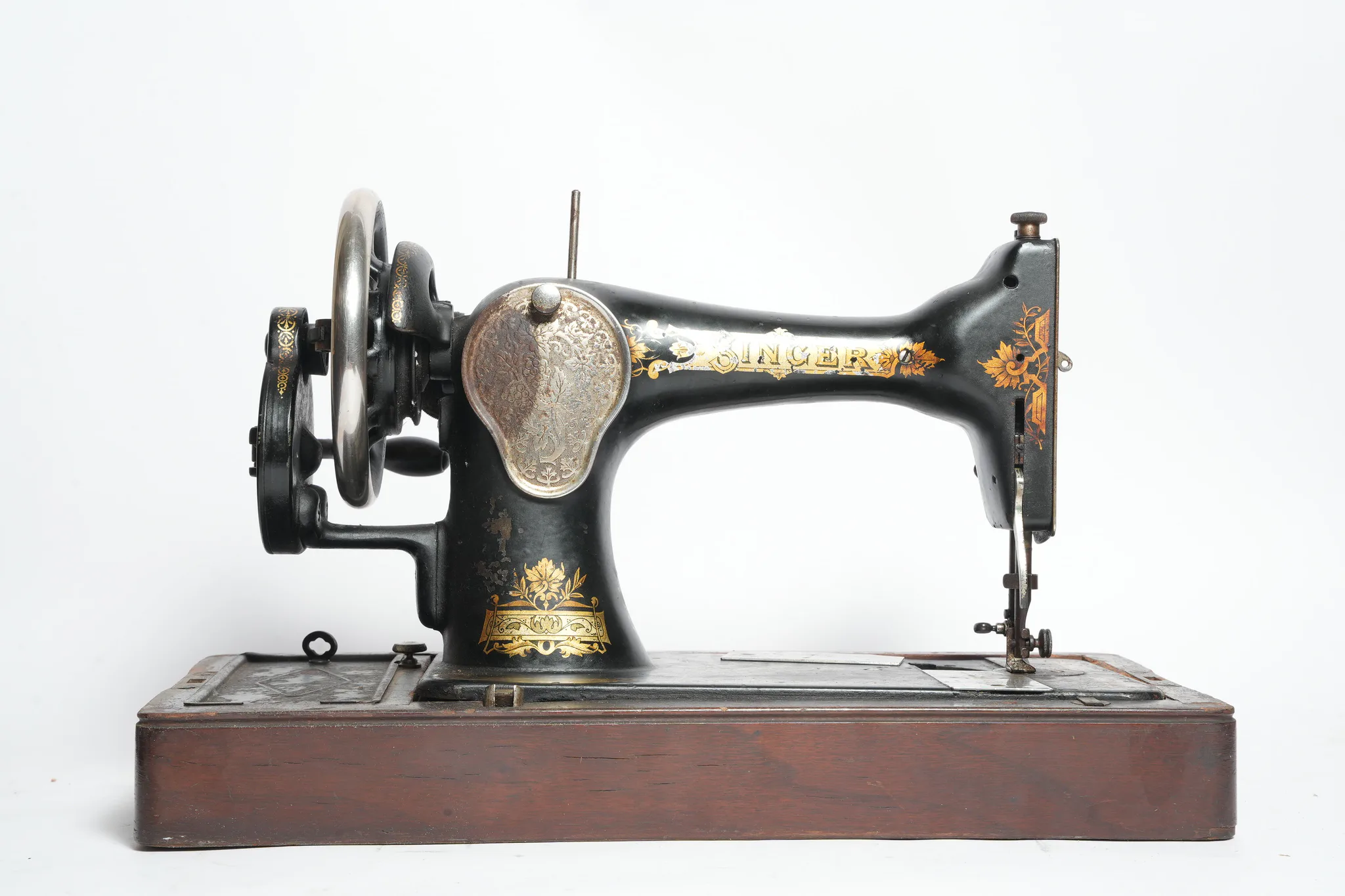
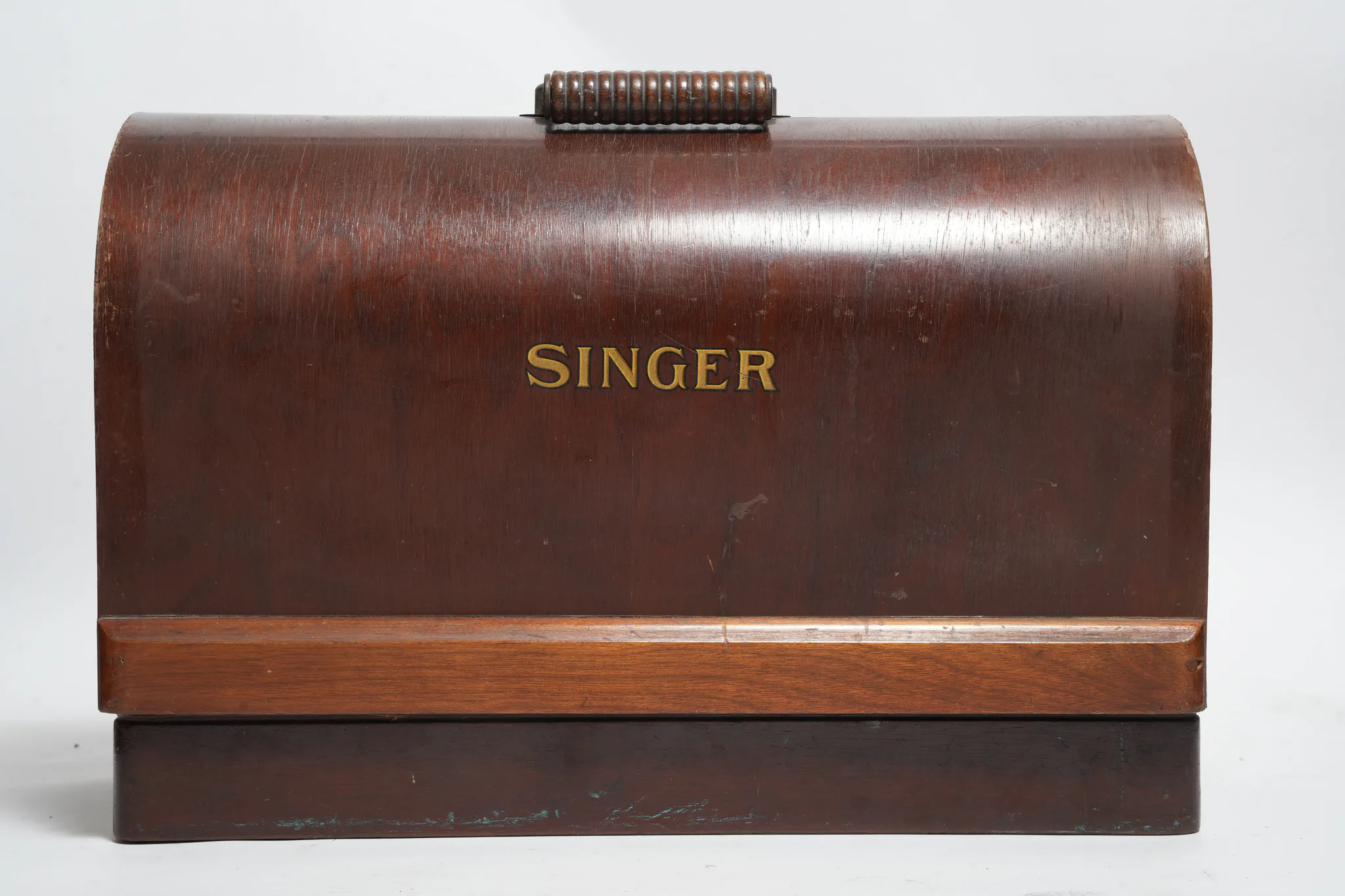
A late-19th to early-20th-century Singer Model 28 three-quarter size sewing machine presented on its original wooden table base. It features cast-iron construction with black japanned enamel, ornate gilded Victorian floral decals, and an embossed rear access plate. The unit is fitted with a hand-crank drive mechanism, spoked balance wheel, and vibrating shuttle mechanism with dual sliding bed plates.
Employs Singer's reliable oscillating bullet-shuttle movement with dual metal bed slide plates for bobbin access.
Equipped with a geared manual hand crank and spoked flywheel designed for independent operation without treadle or electricity.
Finished with classic gold-leaf Victorian scrollwork flanking the traditional Singer company arm lettering and pillar cartouche.
Features an ornate relief-engraved pear-shaped metal access plate on the rear upright casting.
Heavy-gauge solid cast-iron body finished in high-gloss black japanned lacquer built for multigenerational longevity.
Mounted directly onto a contoured solid timber base originally fitted with lockable bentwood case clasps.
Measurements, construction, identity, and seller-supplied details are kept together for direct comparison.
Provenance documentation was not supplied for this specific Singer Model 28 Hand-Crank Sewing Machine; this listing is based on the supplied photographs only.
The elaborate floral decals and brass emblem shown on the black arm reflect the late Victorian era, when utilitarian domestic machinery was crafted as an ornate centerpiece for the household parlor.
Visible from the flywheel view, the hand-crank assembly allowed dressmakers and households worldwide to produce precise, reliable lockstitches long before electrification reached standard domestic environments. That specificity gives the buyer a traceable, emotionally resonant piece of United States / United Kingdom (Clydebank, Scotland) design history rather than a generic decorative substitute.
Singer introduces the 3/4-size vibrating shuttle Model 28 as a portable domestic companion to the full-size Model 27.
Intricate gilded Victorian floral scrollwork becomes one of Singer's most celebrated factory finishes across export and domestic markets.
The Kilbowie and Elizabeth factories produce millions of hand-crank machines for global regions without household electrical grids.
Singer updates the platform into the Model 128, modernizing shuttle ejection mechanisms and bobbin winder geometry.
The machine shows authentic age-appropriate patina and cosmetic wear across painted and metal surfaces. The black japanning displays moderate crazing, chipping, and wear along the arm and edges, while the gilt decals show partial rubbing and fading. Mechanical brightwork exhibits localized tarnishing, surface oxidation, and patina, and the wooden base displays typical abrasions, edge wear, and faint paint transfer.
Gilt decals retain substantial luster with localized losses and rubbing along the top arm and base; the black japanned enamel has minor edge chipping and age crazing.
The embossed pear-shaped rear plate, faceplate, and hand-crank components show visible oxidation, surface patina, and mild spot corrosion consistent with antique age.
The hardwood mounting base displays surface scuffs, small dings, worn finish along the corners, and remnants of vintage marking or residue near the front rim.
Hand-crank drive, balance wheel, spool pin, tension assembly, and slide plates are intact in place; front bobbin slide plate sits slightly recessed/open.
Inspected, photographed, and packed with its condition report.
Custom-fit protective packing with tracked, insured courier service.
Return requests are accepted within fourteen days of confirmed delivery.
Prepared for courier handoff within three to five business days.
Contact the seller for more information or to discuss this object.