
01
Porcelain Rotary Switch
Distinctive period white ceramic rotary switch mounted directly to the upper casework.
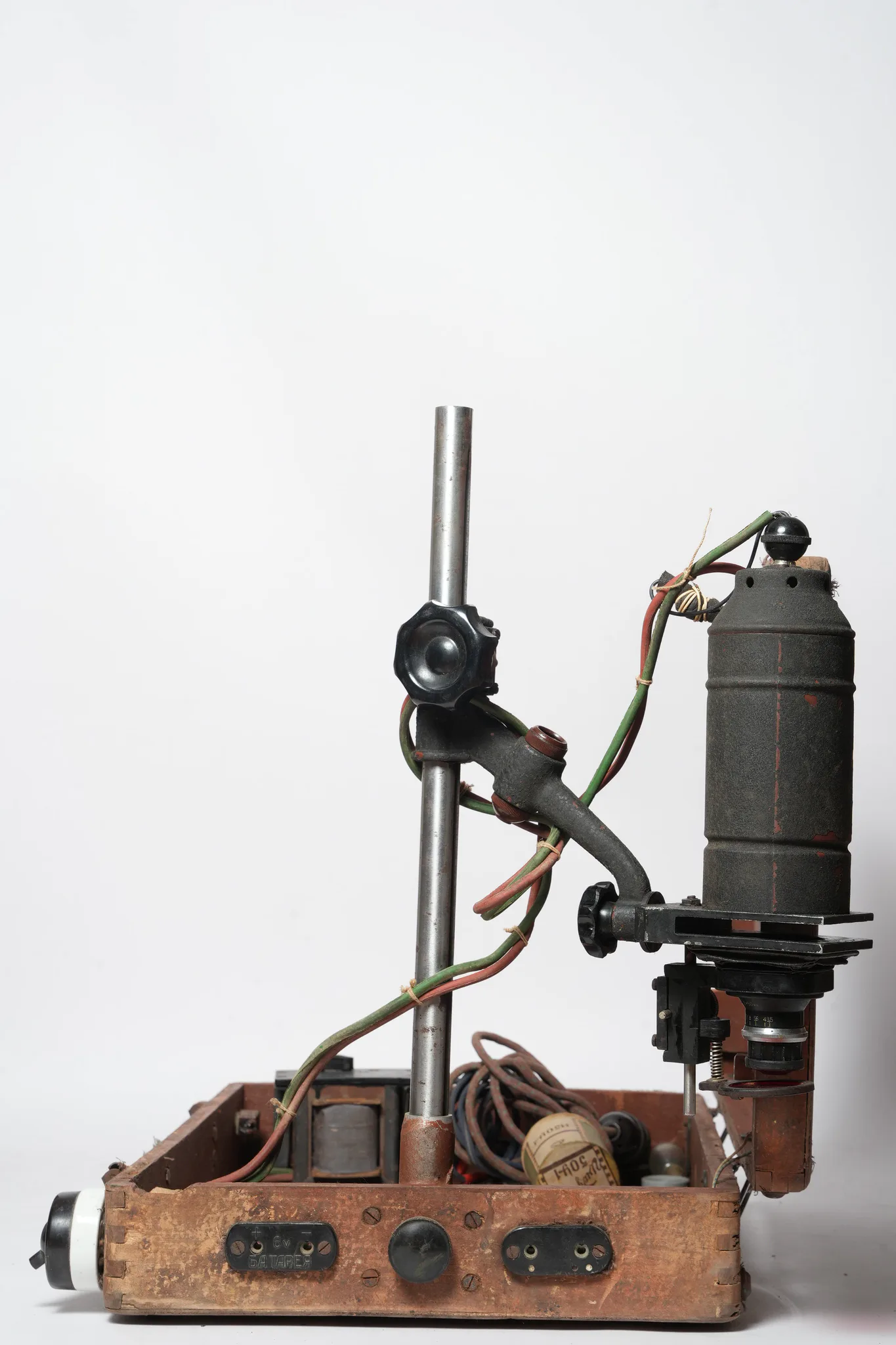
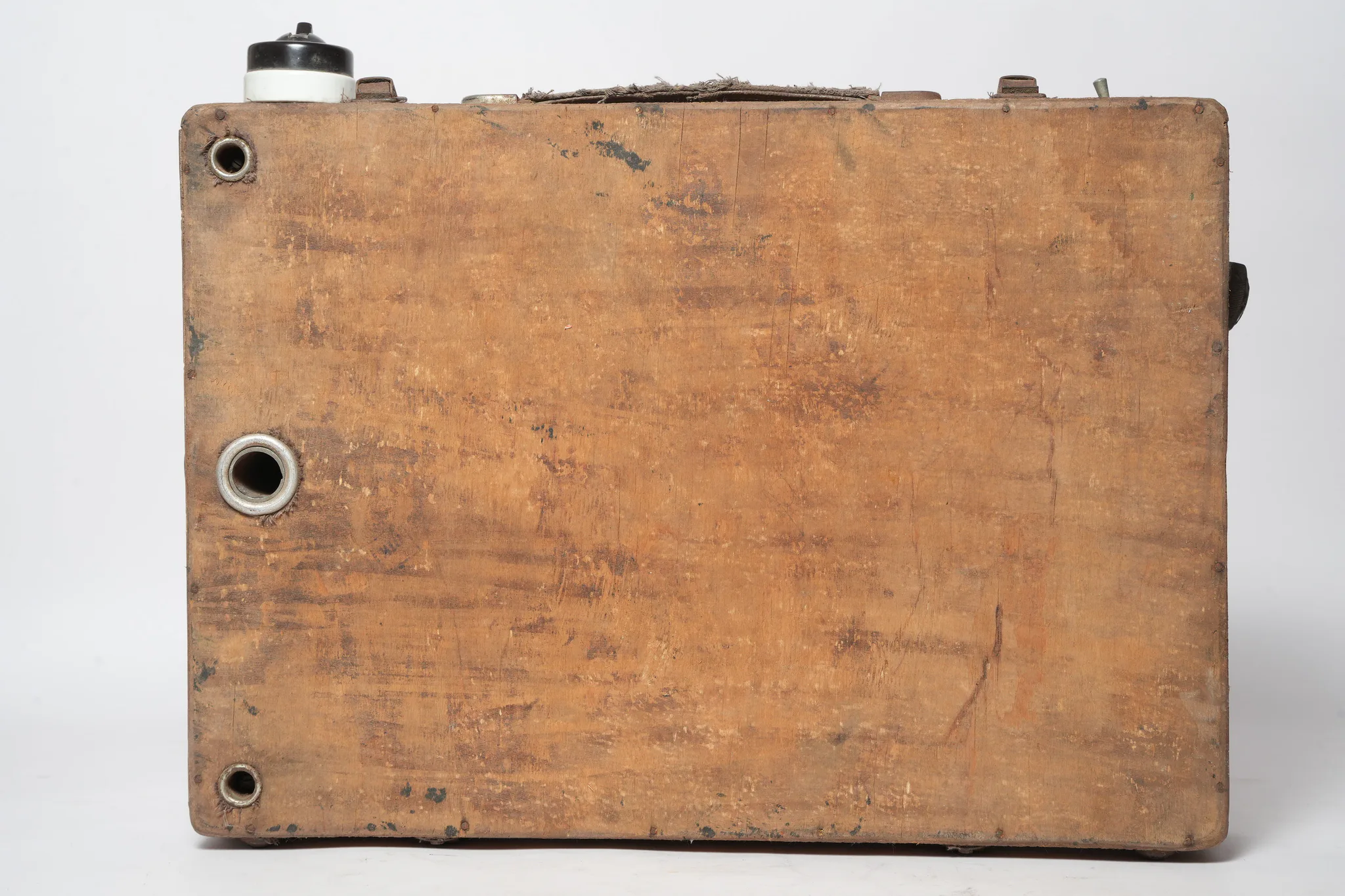
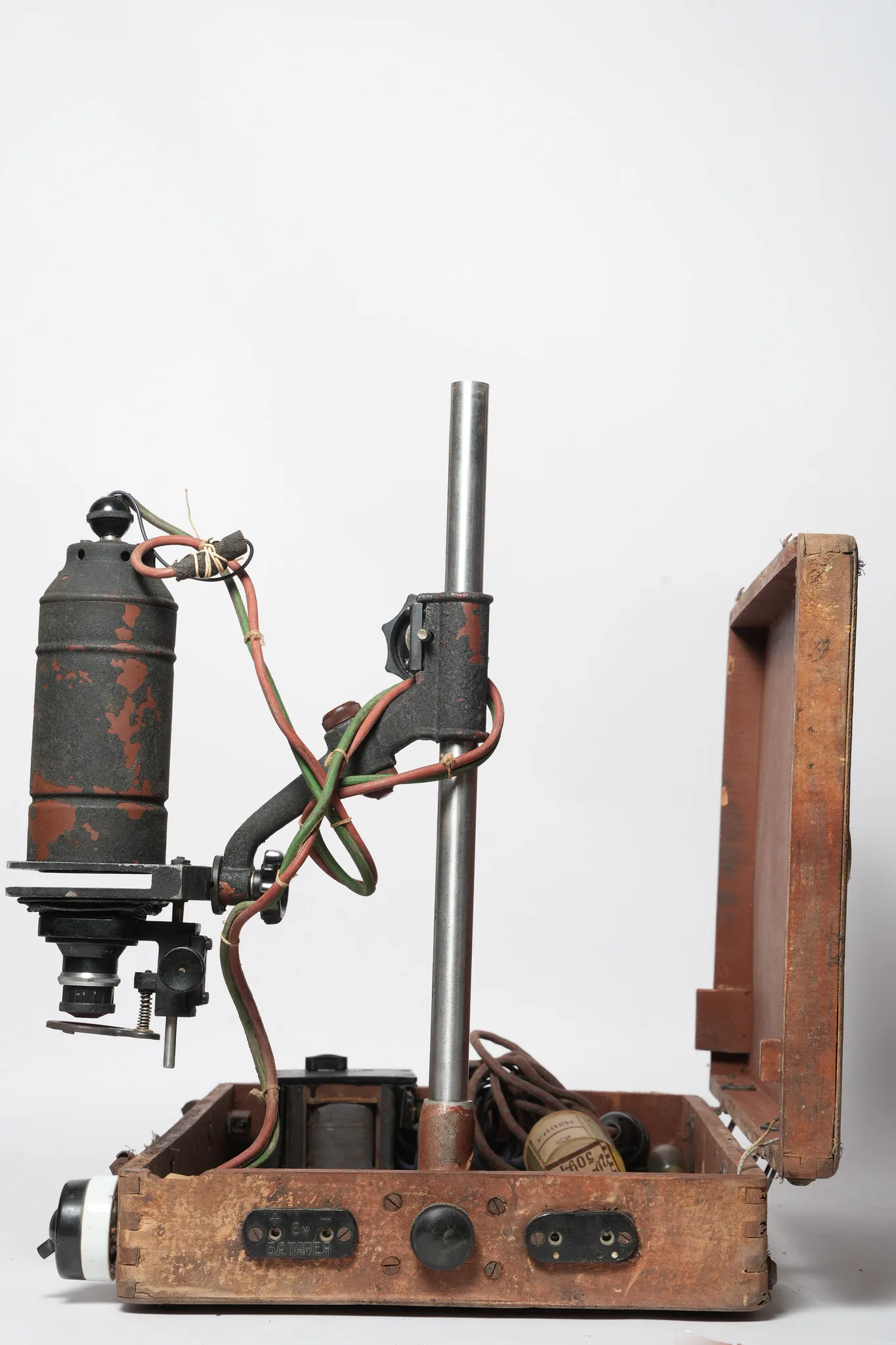
Constructed from weathered timber panels secured with perimeter nails, this vintage electrical apparatus or instrument enclosure features an external surface-mount white porcelain rotary switch with a black turn-key. Three circular metal-lined eyelet pass-throughs are positioned vertically along the left face, while the top houses a heavily worn fabric webbing handle, mounting brackets, and a toggle lever. A fluted black control knob protrudes from the right flank, indicative of an artisanal or custom-built mid-20th-century technical or scientific instrument.
Distinctive period white ceramic rotary switch mounted directly to the upper casework.
Field-style heavy textile carrying strap secured by riveted metal end brackets.
Three reinforced circular eyelets arranged vertically to allow wire routing without insulation chafing.
Traditional box-built timber construction with fine perimeter nail fastenings.
Features controls distributed across the top plane and right lateral panel.
Complete original surface preservation with authentic historical wear and natural wood aging.
Measurements, construction, identity, and seller-supplied details are kept together for direct comparison.
Provenance documentation was not supplied for this specific Vintage Custom Wooden Electrical Instrument Enclosure; this listing is based on the supplied photographs only.
Before mass-produced plastic housings dominated technology, laboratories and technical trades built bespoke enclosures from seasoned timber, repurposing durable domestic components like the ceramic rotary switch visible on top.
The three metal grommets on the left panel allowed operators to pass high-voltage leads or sensor wiring directly into the internal chassis without risking timber splintering or frayed wire jackets during operation.
Surface-mounted ceramic rotary switches become standard across European domestic and workshop electrical installations.
Custom wooden housing constructed to accommodate specialized scientific, radio, or workshop testing circuitry.
Enclosure accumulates heavy handling marks, surface abrasions, and fabric handle wear through continued utility.
Preserved as an authentic specimen of early-to-mid 20th-century vernacular electrical craftsmanship.
The wooden case displays heavy age-related patina, surface abrasions, drying cracks, and scattered dark staining across all visible surfaces. The fabric carrying handle is significantly frayed and worn along its central span, though still anchored by its metal brackets. The porcelain switch housing and visible metal eyelets remain intact with authentic oxidation and surface weathering.
Exhibits widespread surface wear, scratches, scuff marks, and scattered dark pigment stains consistent with utilitarian workshop use.
The white ceramic base and black rotary cap remain structurally intact with minor surface grime and no visible structural fractures.
The woven fabric webbing shows advanced thread fraying, edge separation, and fiber loss across its exposed middle section.
The three metal eyelets on the left face and top mounting brackets show authentic tarnishing, oxidation, and surface corrosion.
Inspected, photographed, and packed with its condition report.
Custom-fit protective packing with tracked, insured courier service.
Return requests are accepted within fourteen days of confirmed delivery.
Prepared for courier handoff within three to five business days.
Contact the seller for more information or to discuss this object.