
01
Mottled Enamel Reservoir
Features a distinctive blue and white spatter enamel tank base designed for corrosion resistance.
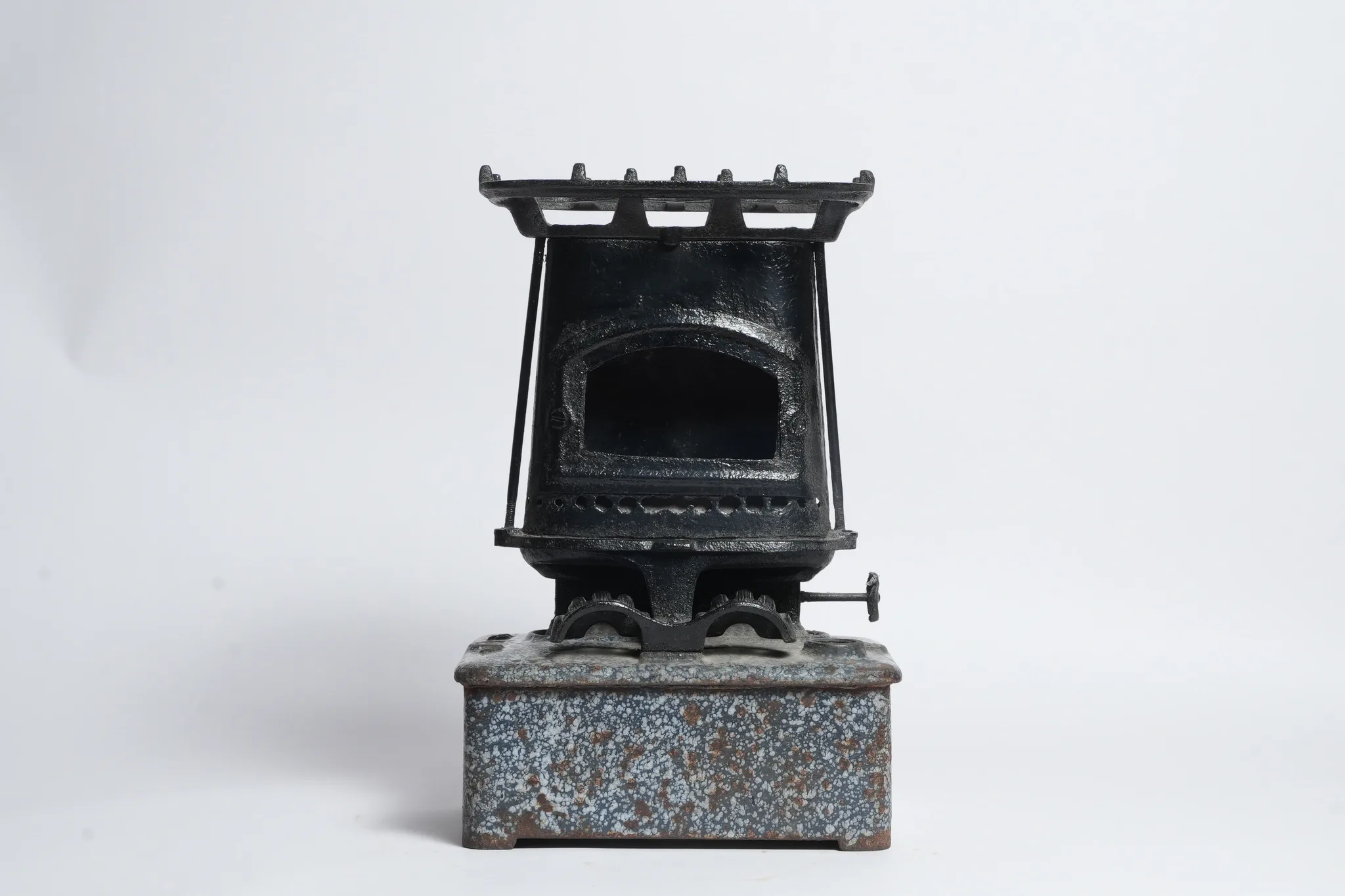
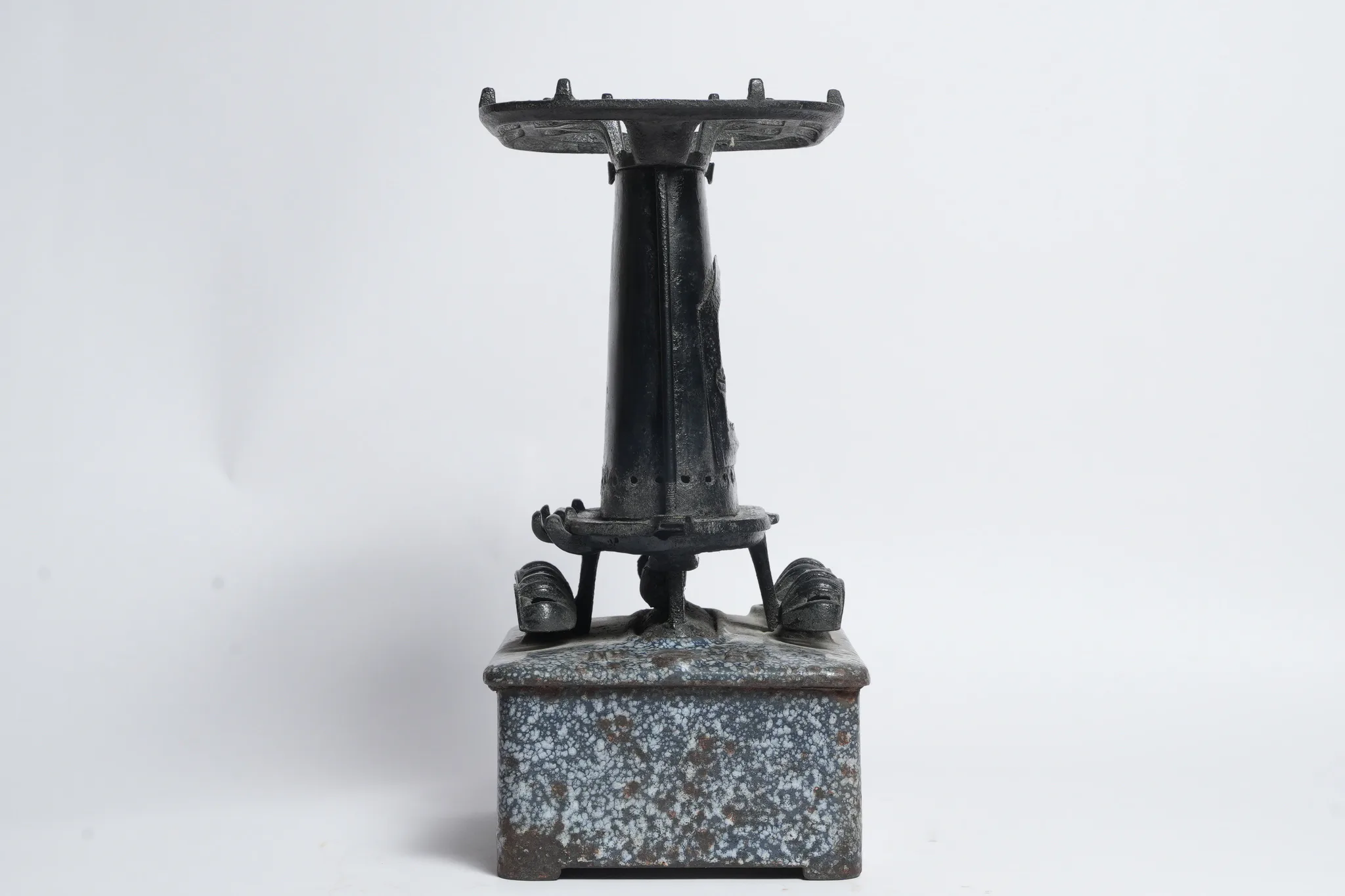
This vintage double-burner kerosene stove features a heavy cast-iron chimney and integrated top trivet mounted over a rectangular mottled enamel fuel reservoir. The front panel incorporates an arched inspection window with lower draft perforations positioned above twin wick housings controlled by a side adjustment knob. Built with a slender vertical profile, it exemplifies early twentieth-century domestic heating and cooking ironware.
Features a distinctive blue and white spatter enamel tank base designed for corrosion resistance.
Equipped with dual burner arched housings to support two parallel flat wicks for enhanced heat output.
Heavy cast-iron top grid supports cooking vessels, kettles, or flat irons directly above the draft.
Designed for flame inspection and ambient heat projection, framed within the cast iron facade.
External turn-key spindle allows manual elevation and lowering of the wick mechanism.
Base of the chimney features a calibrated row of intake holes to sustain steady airflow to the burners.
Measurements, construction, identity, and seller-supplied details are kept together for direct comparison.
Provenance documentation was not supplied for this specific Vintage Double-Burner Cast Iron & Enamel Kerosene Stove; this listing is based on the supplied photographs only.
Seen from the front in photo 3, this double-burner stove provided essential heat for boiling kettles or warming flatirons before domestic electricity, relying on twin wicks and simple gravity-fed paraffin.
Captured in profile in photo 2, the pairing of a slender cast-iron draft column with a spatter-enameled tank highlights an era where functional utility products combined durability with decorative industrial finishes.
Portable twin-burner kerosene stoves were introduced across Europe for cooking, heating sad irons, and workshop warming.
Manufacturers widely adopted speckled enamel reservoirs to resist corrosion and fuel staining while adding durable color.
The expansion of piped domestic gas and electrical grids gradually phased out wick-fed utility paraffin stoves.
Surviving early cast-iron and mottled enamel stoves become sought-after specimens of industrial folk craft.
The stove displays authentic vintage patina with surface oxidation around the lower corners and seams of the enameled base. The black finish on the cast-iron chimney and cooking trivet exhibits mild surface aging and light dust. The front inspection aperture is open with the original mica pane missing, while the wick control key remains present.
The stove displays authentic vintage patina with surface oxidation around the lower corners and seams of the enameled base. The black finish on the cast-iron chimney and cooking trivet exhibits mild surface aging and light dust. The front inspection aperture is open with the original mica pane missing, while the wick control key remains present.
Only components visible in the photographs of this Vintage Double-Burner Cast Iron & Enamel Kerosene Stove are included; unseen accessories are not assumed.
Operational performance for this individual Vintage Double-Burner Cast Iron & Enamel Kerosene Stove is not claimed unless demonstrated in the photographs or separately tested.
Age, patina, wear, and any missing elements shown in the Vintage Double-Burner Cast Iron & Enamel Kerosene Stove images should be considered part of its condition.
Inspected, photographed, and packed with its condition report.
Custom-fit protective packing with tracked, insured courier service.
Return requests are accepted within fourteen days of confirmed delivery.
Prepared for courier handoff within three to five business days.
Contact the seller for more information or to discuss this object.