
01
Modular Stand Design
Two circular cutouts in the lower steel shelf secure the rounded brass tanks in place during operation.
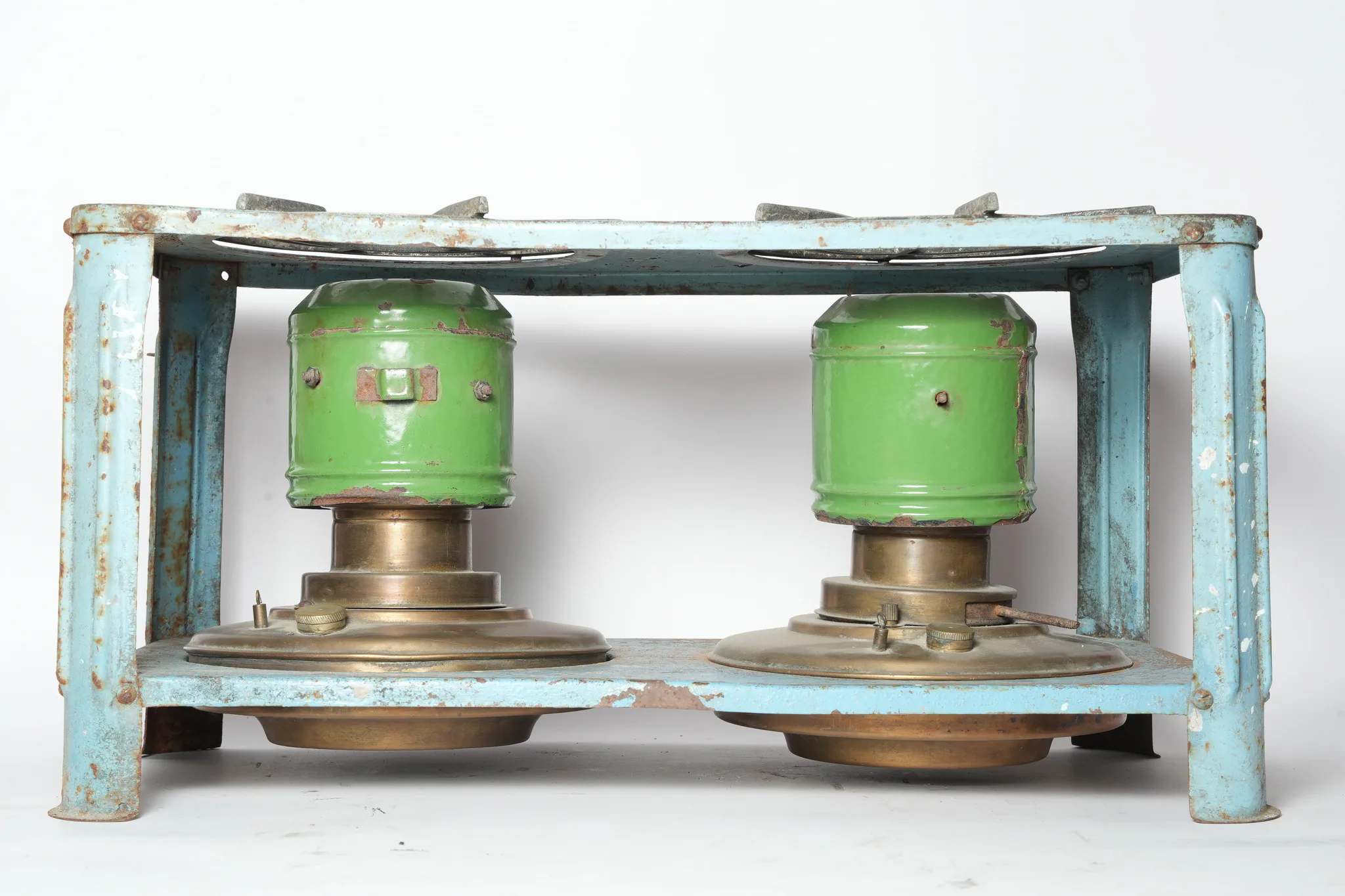
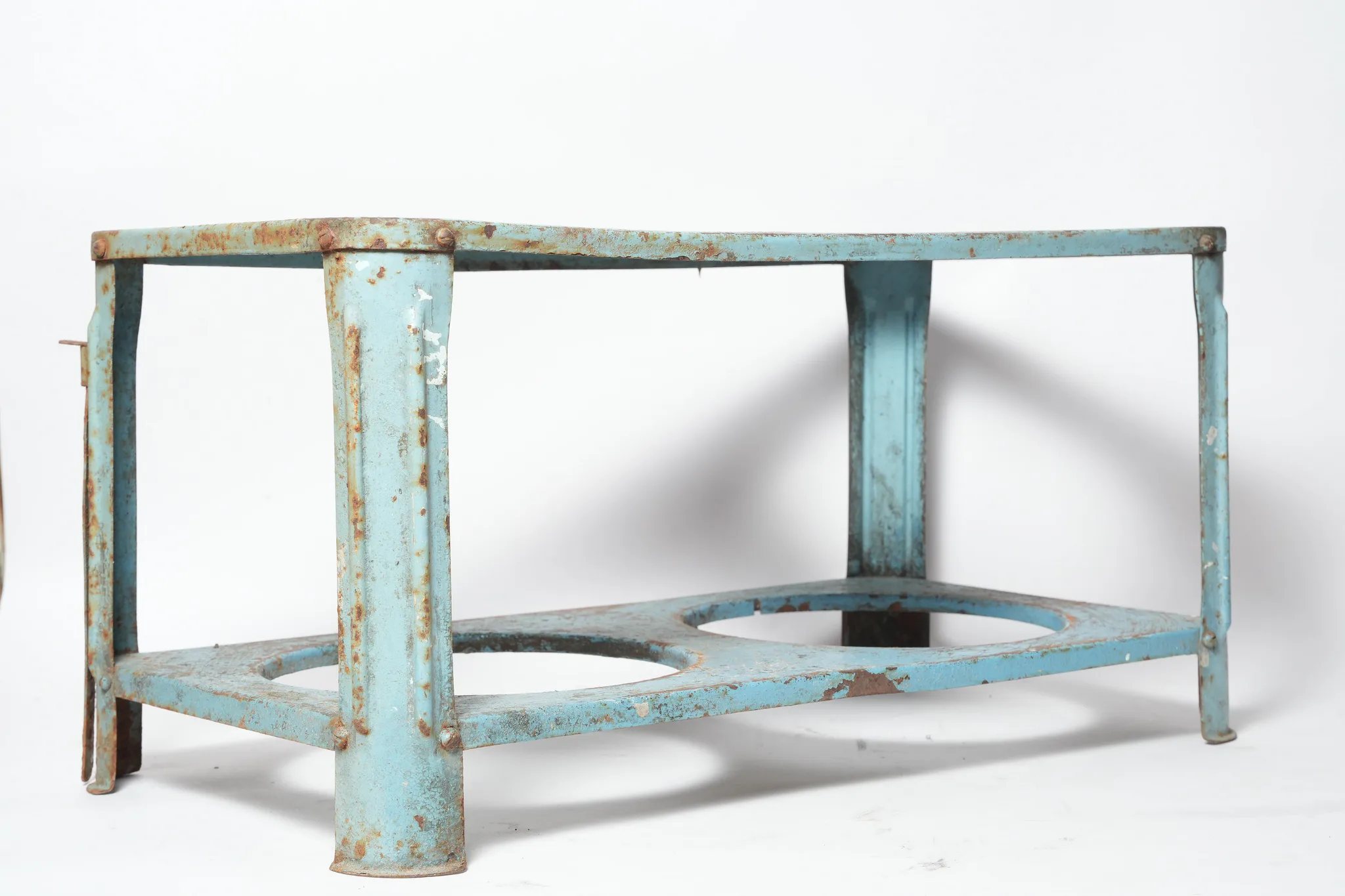
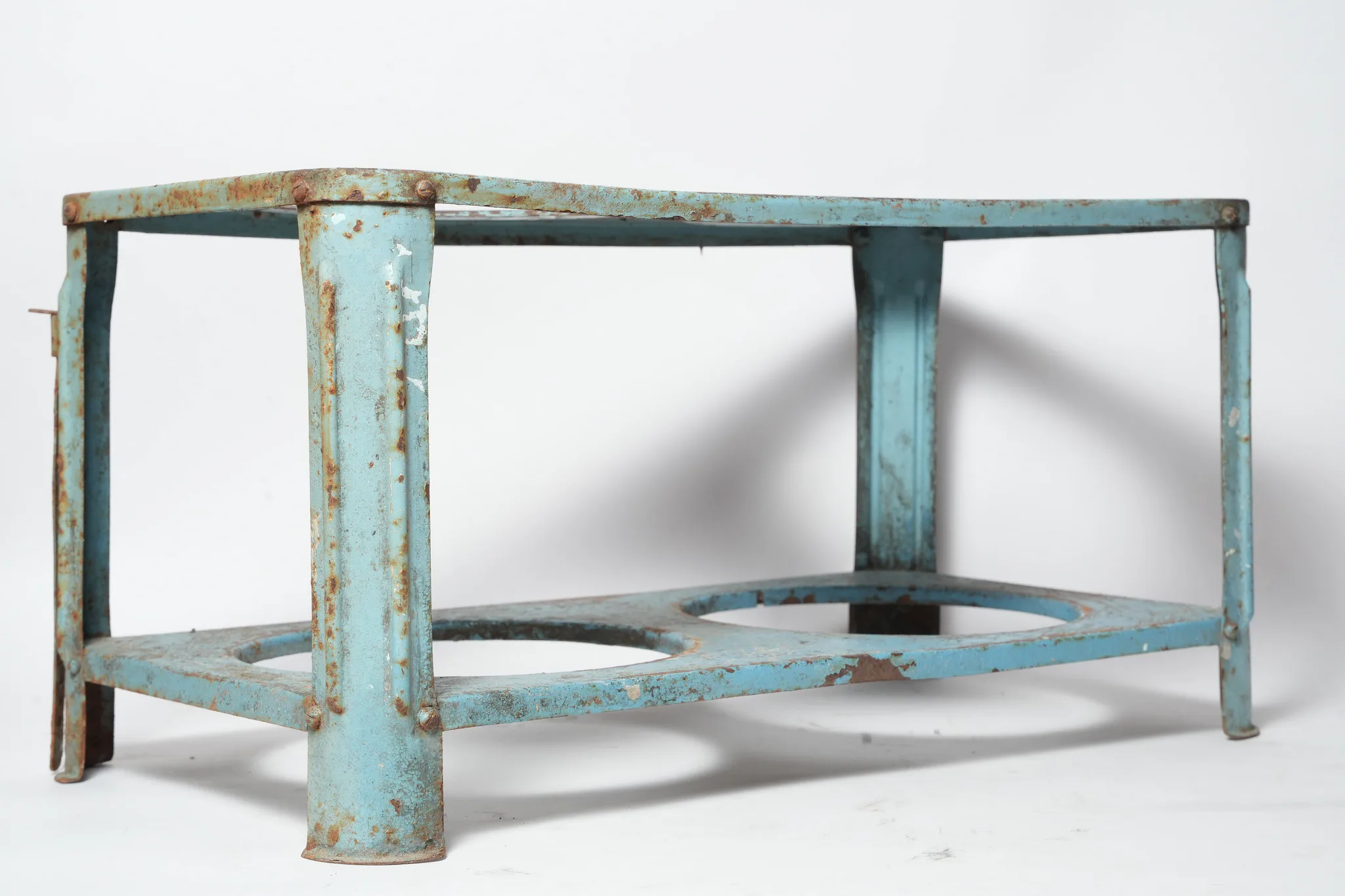
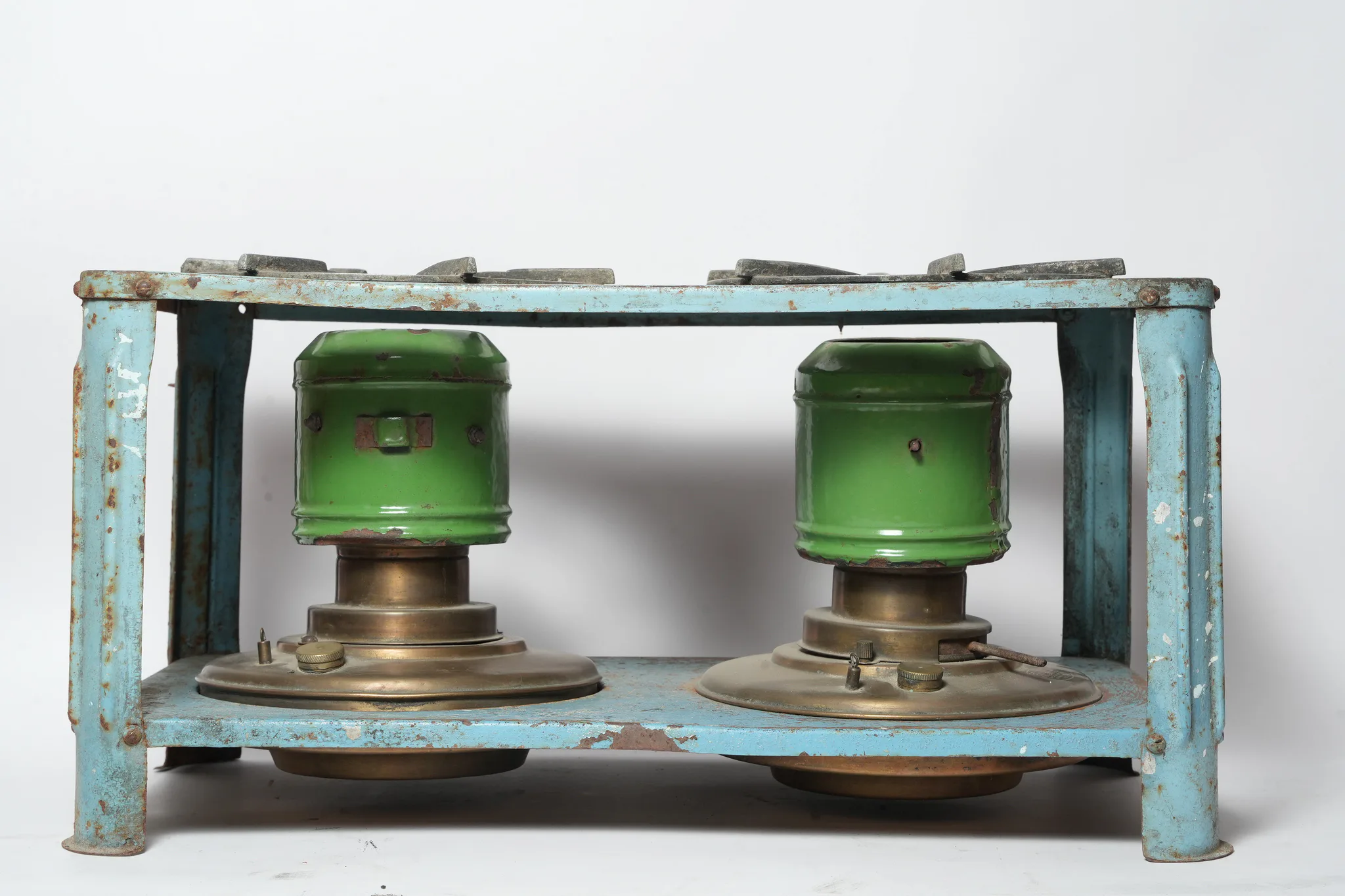
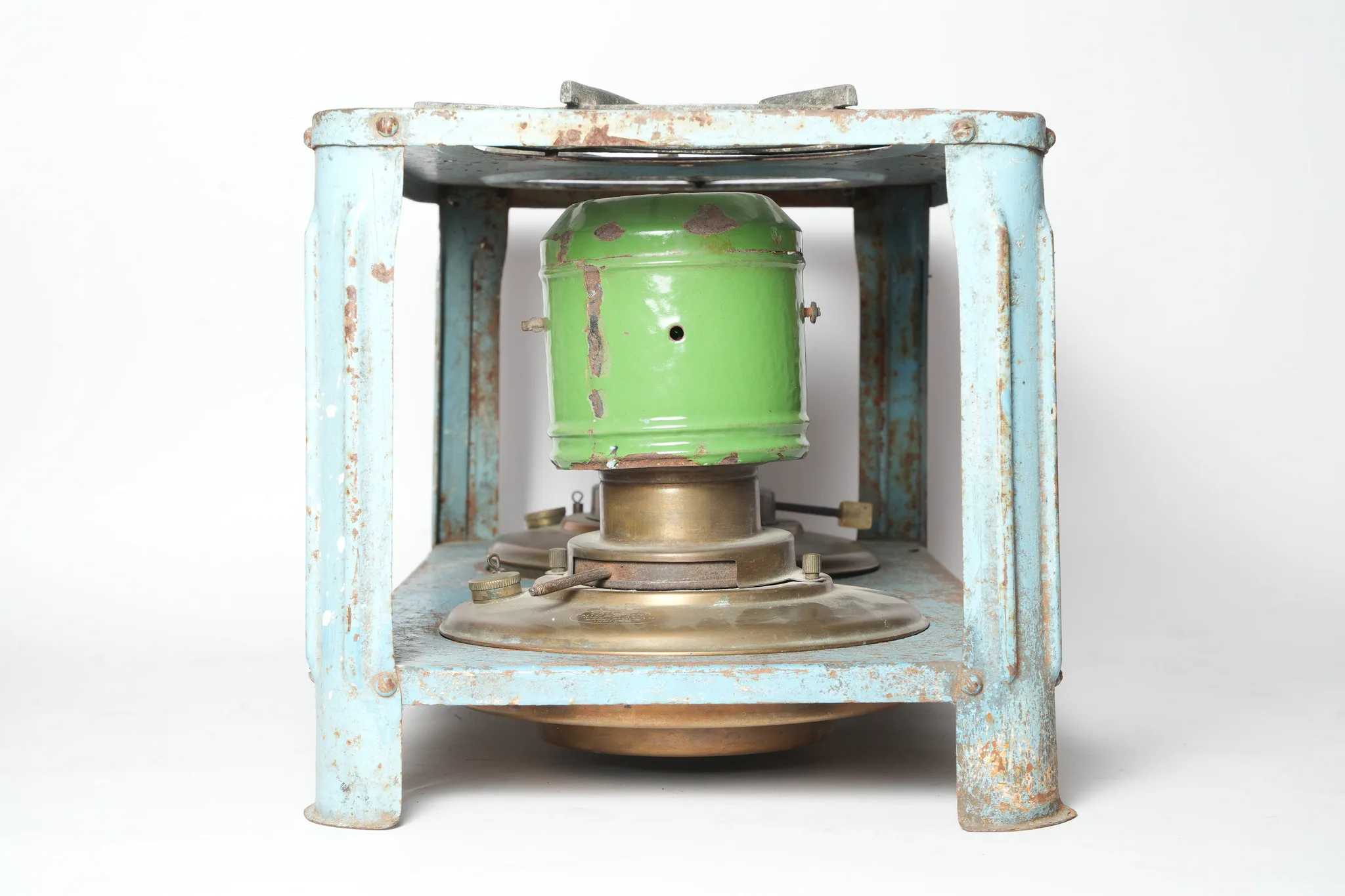
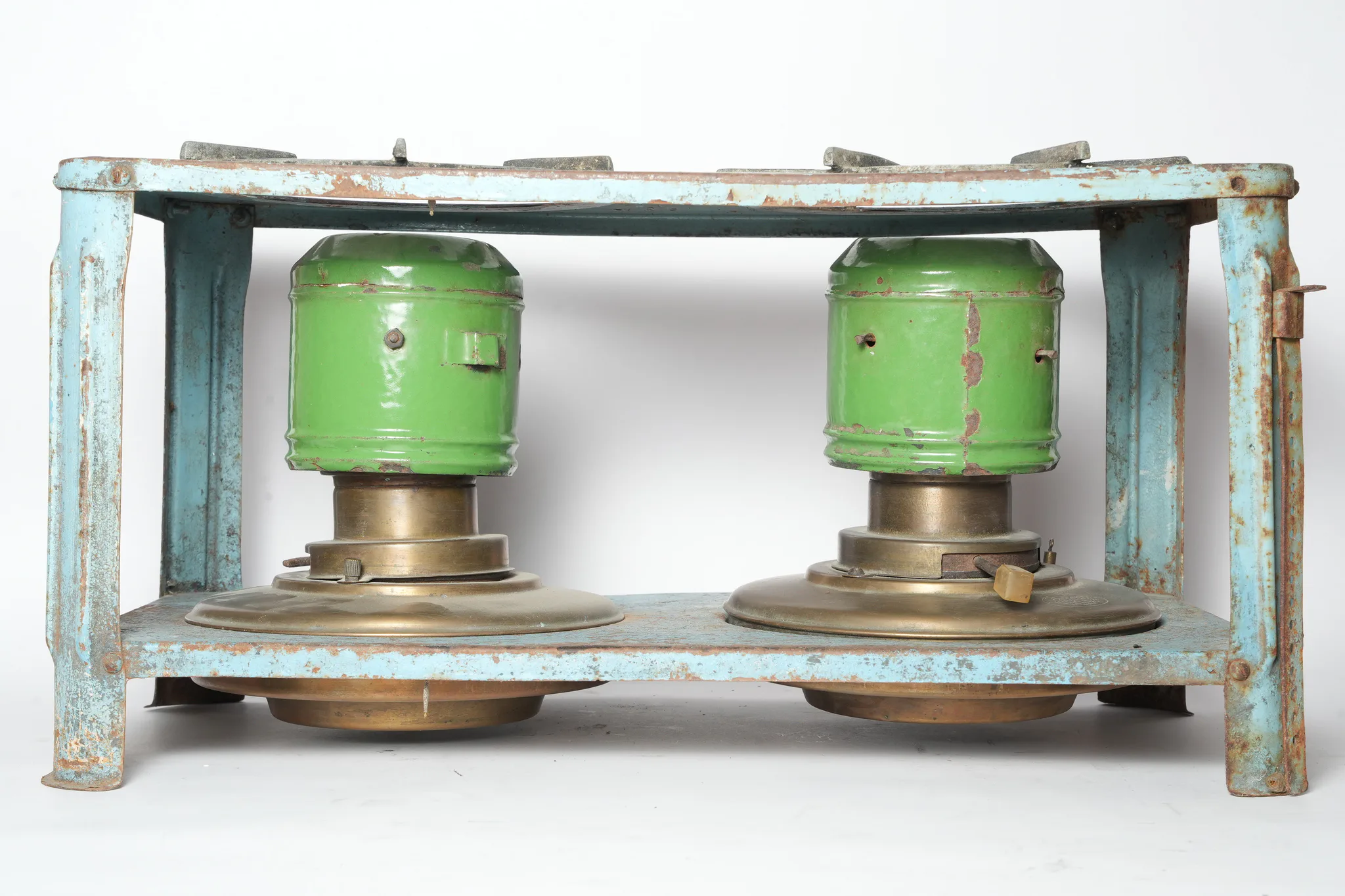
This vintage two-burner kerosene stove assembly is housed in a light-blue pressed-steel frame with circular cutouts designed to secure two circular brass fuel reservoirs. Each burner unit is fitted with a vibrant green vitreous-enamel cylindrical chimney, one featuring an adjustable inspection port cover. Cast-iron trivet supports sit across the upper rim to provide a stable heating surface for cookware or laboratory vessels.
Two circular cutouts in the lower steel shelf secure the rounded brass tanks in place during operation.
Deep green porcelain enamel chimneys direct airflow and protect the combustion flame while resisting high heat.
Two separate brass fonts allow independent fuel capacity and dual-pot cooking or heating capability.
Integrated inspection window housing on the chimney allows monitoring and lighting of the burner mechanism.
Embossed channel reinforcement along the legs provides rigid structural support despite lightweight sheet fabrication.
Heavy-duty cast-iron pot supports bridge the top frame to support kettles, pans, or laboratory containers.
Measurements, construction, identity, and seller-supplied details are kept together for direct comparison.
Provenance documentation was not supplied for this specific Vintage Dual-Burner Kerosene Stove on Blue Steel Stand; this listing is based on the supplied photographs only.
As seen in Photo 3, the combination of hand-spun brass reservoirs and vibrant enameled chimneys exemplifies early-to-mid 20th century utilitarian manufacturing, where robust daily tools were finished with enduring, colorful vitreous glazes.
Visible in Photos 1 and 2, the weathered blue-painted stand retains honest surface oxidation and wear, recording a long history of domestic or workshop use through its ribbed steel uprights and bolted modular joints.
European manufacturers widely adopted twin-burner sheet-metal stoves for domestic kitchens, rural outposts, and laboratory heating.
Vitreous enamel coatings in distinct colors such as deep green and turquoise became standard to resist burner heat and corrosion.
Sturdy pressed-steel frames with modular removable brass tanks continued to serve in workshops, camps, and auxiliary kitchens.
Surviving dual-burner configurations with intact chimneys and stands are sought after as historical utility and industrial design artifacts.
The painted steel frame exhibits extensive surface rust, flaking, and paint loss across the legs and lower support deck. The brass fuel fonts retain an aged patina with localized tarnish, surface scratches, and oxidation spots. Both green enameled chimneys show minor enamel loss, surface wear, and oxidation around edges, rivets, and openings.
Noticeable oxidation and corrosion break through the pale blue paint along the pressed ribs, bottom deck, and leg corners.
Both cylindrical brass reservoirs remain intact with intact filler caps and hardware, showing natural age patina and tarnish.
Glossy green porcelain enamel shows minor chipping and edge oxidation around the top collars and fastener points.
Original slotted fasteners and nuts show surface oxidation; upper cast-iron trivets display heat-related patina.
Inspected, photographed, and packed with its condition report.
Custom-fit protective packing with tracked, insured courier service.
Return requests are accepted within fourteen days of confirmed delivery.
Prepared for courier handoff within three to five business days.
Contact the seller for more information or to discuss this object.