
01
Cast Metal Clamshell
Heavy-duty two-piece housing designed to withstand transport between racing lofts and competition clubhouses.
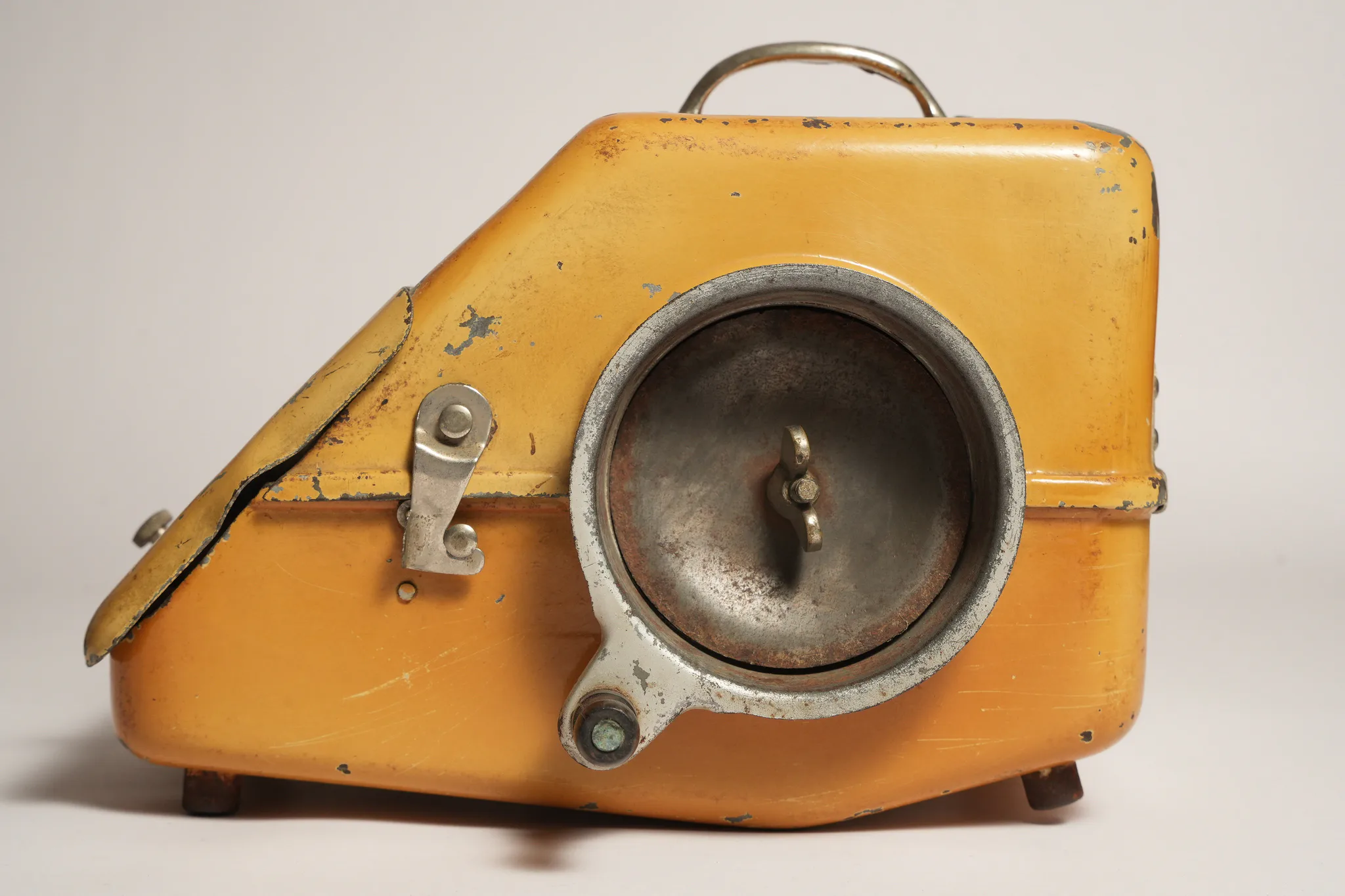
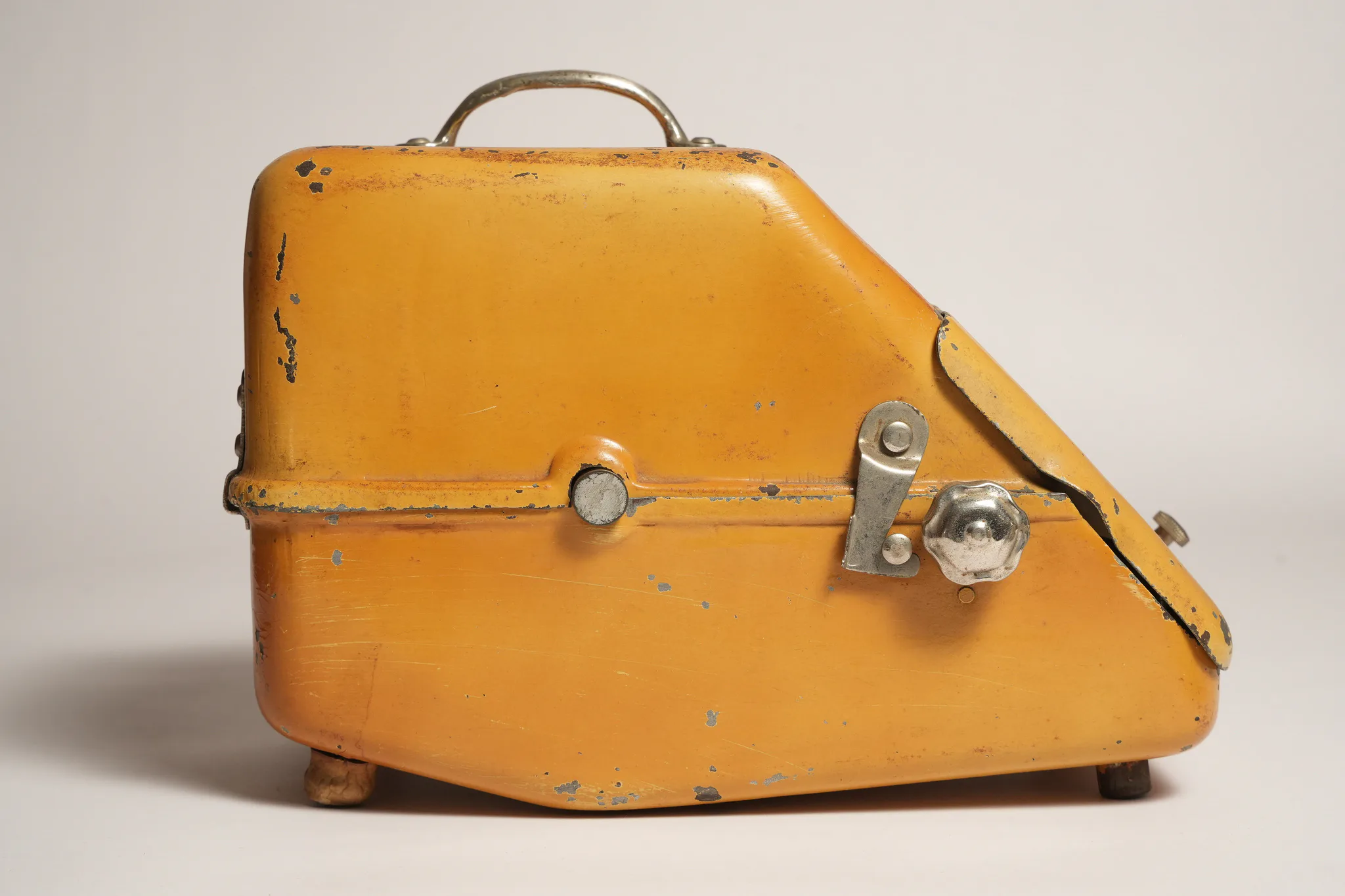
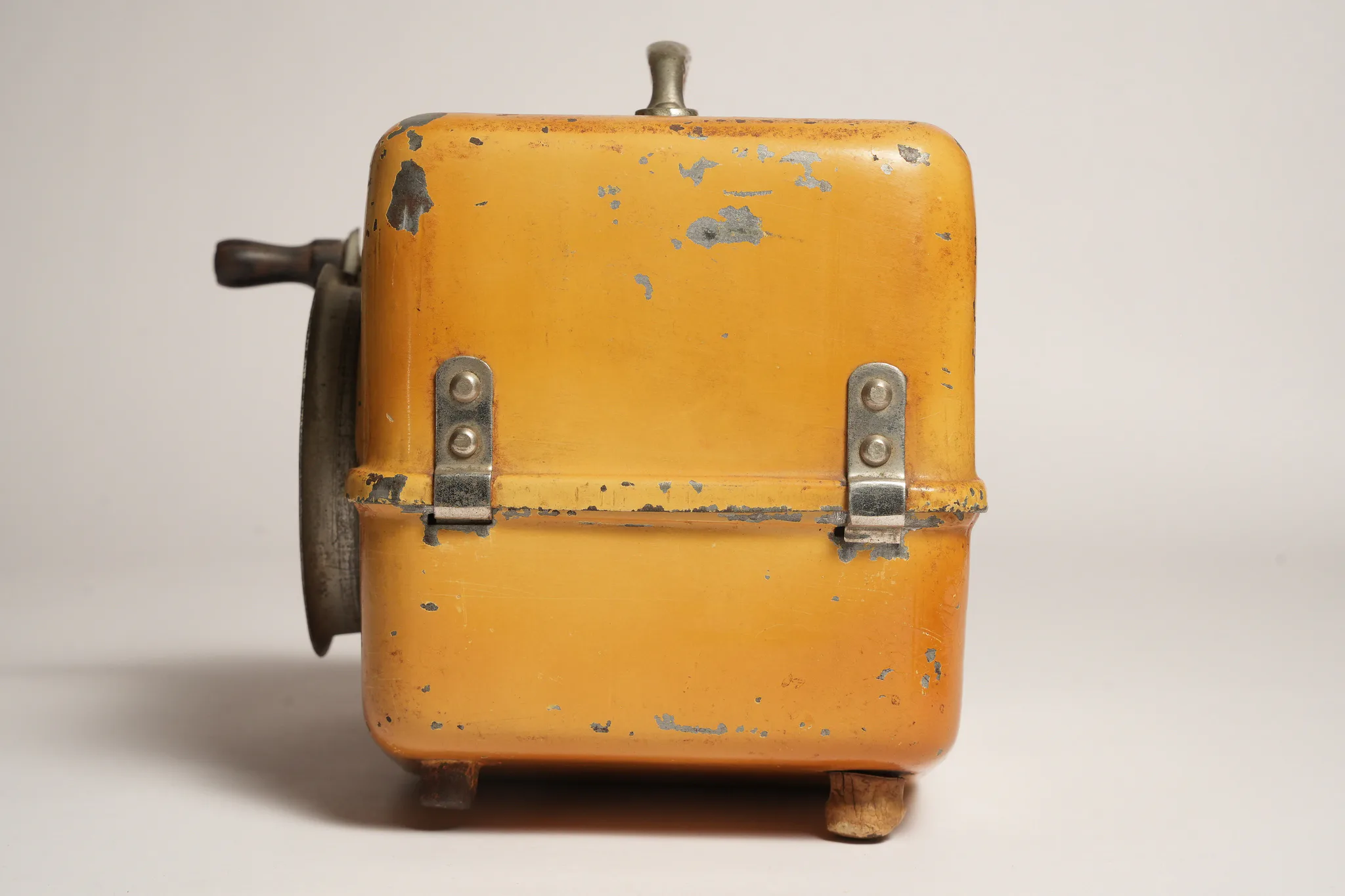
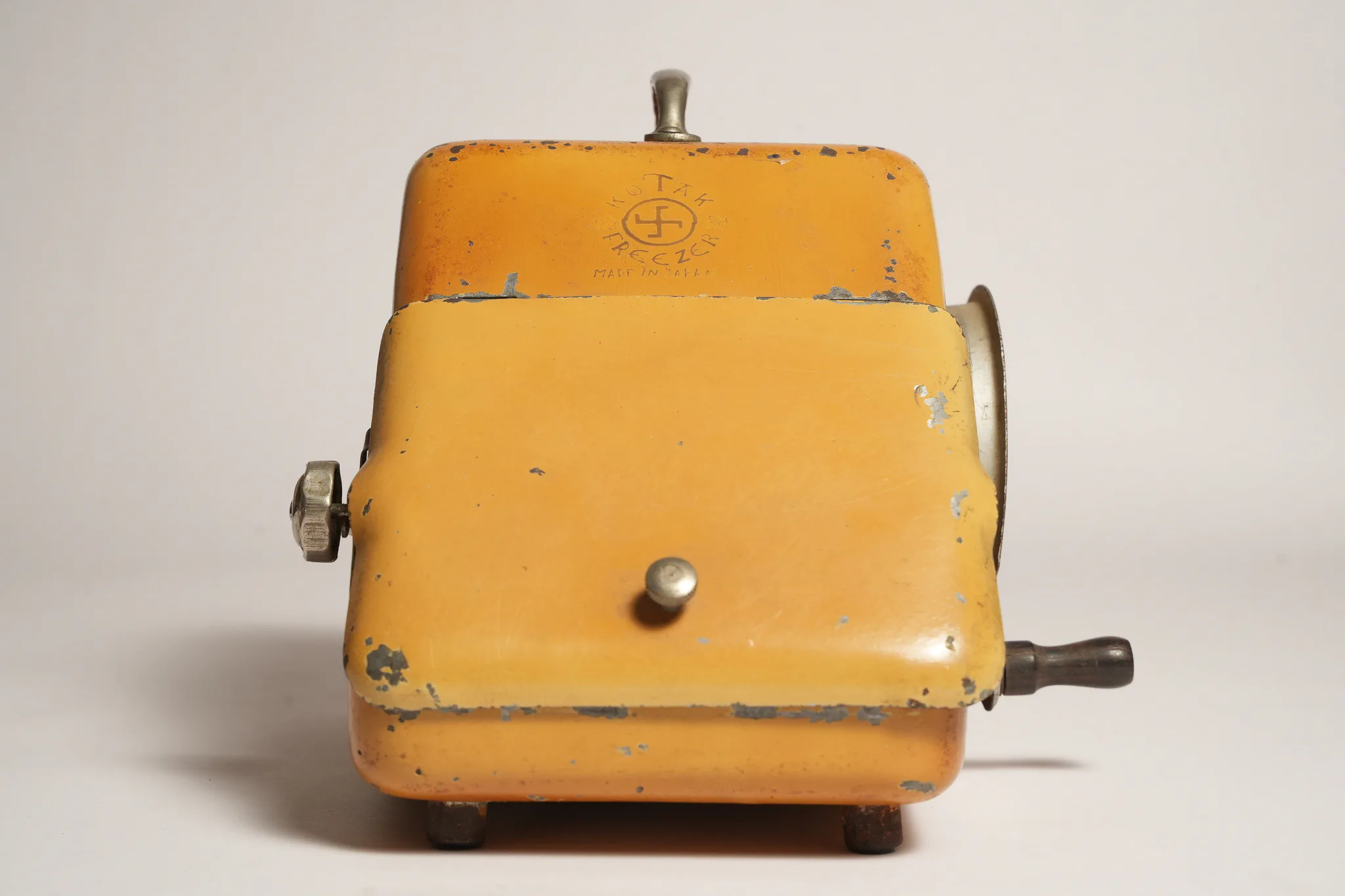
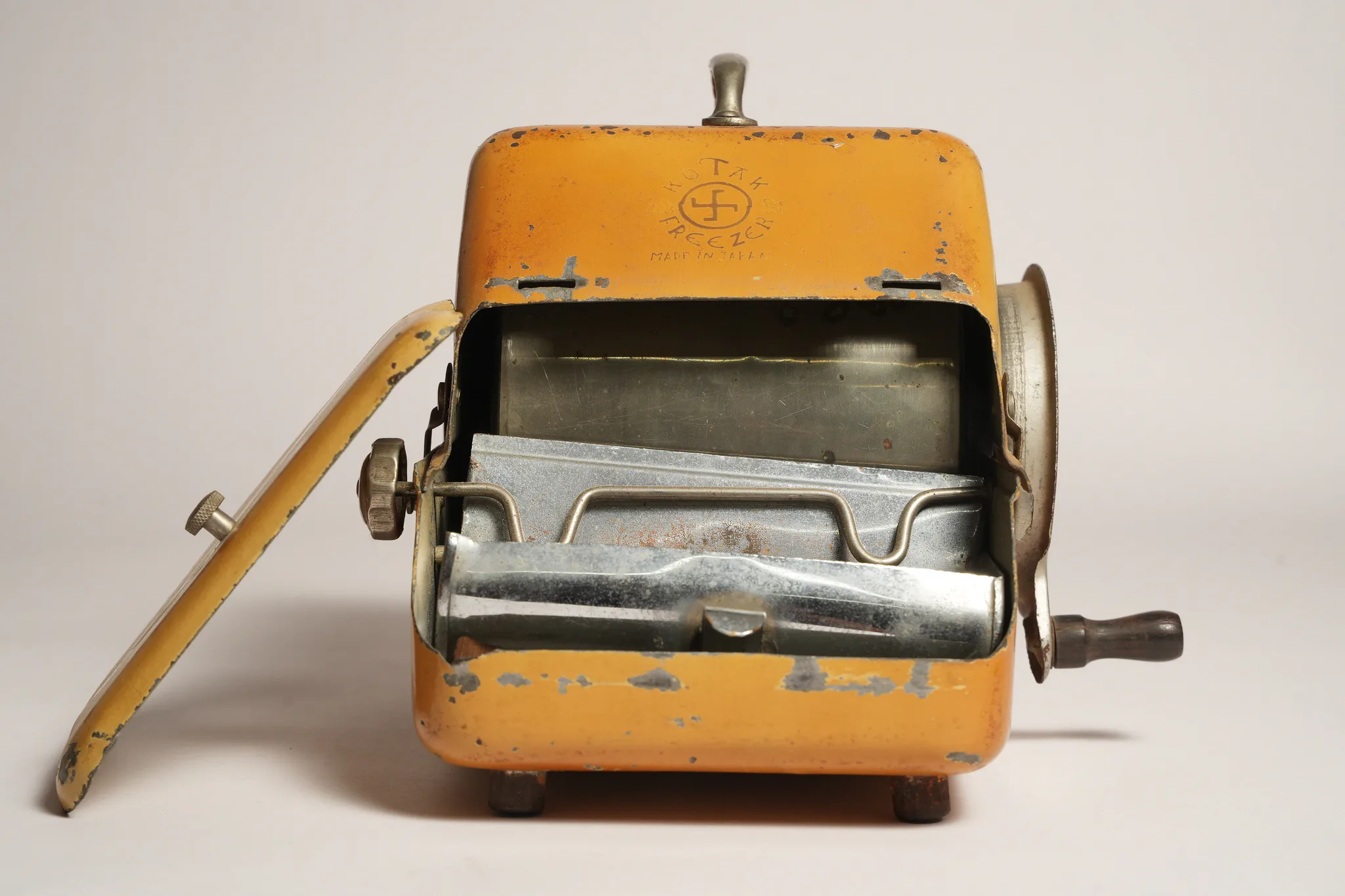
Constructed from a robust two-piece cast metal clamshell housing in yellow enamel, this mechanical pigeon racing timer was engineered to precisely record the arrival of racing homing pigeons. The right flank features an integrated manual crank ring surrounding a central butterfly winding key for the internal clockwork movement, while the opposing side provides a faceted control knob and tamper-evident sealing port. An angled front hood secures the arrival ring entry aperture, supported by heavy-duty nickel-plated toggle latches and rear hinges.
Heavy-duty two-piece housing designed to withstand transport between racing lofts and competition clubhouses.
Ingenious side arrangement nesting the clockwork winding key within the manual registration crank assembly.
Angled front trapdoor designed to protect the arrival ring insertion aperture during active competition timing.
Integrated central lead-seal port and lockable draw latches to guarantee race integrity against tampering.
Twin nickel-plated exterior hinges allowing the upper housing to swing open for official club inspection.
Chromed multi-fluted knob positioned on the left flank to control internal mechanisms alongside the main latch.
Measurements, construction, identity, and seller-supplied details are kept together for direct comparison.
Provenance documentation was not supplied for this specific Vintage Mechanical Pigeon Racing Clock (Constatateur); this listing is based on the supplied photographs only.
The ingenious coaxial arrangement shown in the side profile combines a clockwork butterfly winding key recessed within the manual registration crank, allowing club officials to prime the timing mechanism while racers trigger printing upon arrival.
Visible along the clamshell seam, dual toggle draw latches and a dedicated lead-sealing aperture ensured absolute race integrity, preventing unauthorized opening between official pre-race winding and post-race time verification at the club.
Belgian clockmakers develop dedicated mechanical timing clocks to record racing pigeon arrival times securely.
Pigeon timer manufacturers replace traditional wooden cabinets with rugged cast metal housings for club transport.
Production of this industrial yellow-enameled timer featuring coaxial winding and stamping crank architecture.
Mechanical paper-tape pigeon clocks are largely retired in favor of electronic RFID ring scanning systems.
The unit exhibits age-appropriate cosmetic wear, including paint chipping, edge abrasions, surface scratches, and minor oxidation along exposed metal seams and inside the crank recess. The hardware, including the carrying handle, toggle latches, and rear hinges, remains intact with light tarnish. One rear base foot has been replaced with a fitted wooden plug, while the remaining feet appear original.
Noticeable paint loss, surface scuffs, and exposed grey undercoat along the parting seams, edges, and rear panel.
Nickel-plated rear hinges, latches, handle, and side crank show light surface tarnishing and scattered oxidation in recesses.
The rear-right foot has been replaced with a vintage wooden/cork cylindrical plug; other feet show surface wear.
The hinged front hood rests slightly unevenly over the entry slope, showing light paint loss along its rim.
Inspected, photographed, and packed with its condition report.
Custom-fit protective packing with tracked, insured courier service.
Return requests are accepted within fourteen days of confirmed delivery.
Prepared for courier handoff within three to five business days.
Contact the seller for more information or to discuss this object.